
Elevating Employee Experience for Customer Experience Success
Background
By Akshay Shah
In collaboration with the Institute of Customer Experience, Kenya, we gathered insights from over 320 respondents in March-April 2024, through our experience management platform. Our diverse sample covered various demographics, roles, and industries, focusing on the 2024 theme: “Elevating Employee Experience (EX) for Customer Experience (CX) Success.”
You can download and digest the full report here.
The anonymous survey sought to uncover key quantitative and qualitative insights that would delve into:

- Employee Net Promoter Score — Measure levels of employee loyalty and potential advocacy towards their workplace.
- Employee Effort Score — Gauge the ease with which employees deliver outstanding customer experiences.
- Employee Satisfaction — Examine overall job contentment, through experience drivers like engagement, diversity and inclusion, empowerment, leadership, teamwork, growth and recognition.
- EX to CX Alignment —Investigate the influence of employee experience on customer experience and determine variations in the importance and investments allocated to both by organisations.
- CX Perceptions — Capture how organisational capabilities need enhancements to deliver exceptional customer services.
- EX Perceptions — Capture thoughts on how organisational capabilities need enhancements to deliver exceptional employee experiences.
Thematic findings

In this survey, we asked respondents: “What would you do differently if you were CEO for a day?”. The responses to this and other questions in the survey uncovered four major themes for leaders to pay attention to:
- The Need for A Stronger Focus on Employee Experience
- Better Employee Experience to Customer Experience Alignment
- Embedding a Stronger Culture Within Organisations
- Active Demonstration of Aspirational Leadership
These are further explored below.
Key takeaways and actions for business leaders
- Quiet Quitting: One of the most alarming findings is the prevalence of “quiet quitting” where employees remain in their roles but mentally disengage from their work. Over 50% of respondents reported a lack of active engagement, aligning with global trends. Such disengagement undermines culture and hampers motivation, productivity and overall company performance.
- EX — CX Disconnect: While organisations recognise the influence of EX on CX, they lack active focus and investments in EX. To truly excel, businesses must embrace a holistic experience culture that prioritises leadership experience, employee experience, and customer experience in equal measure.
- Know Your Employees: Organisations must grasp the values, needs and challenges of different employee segments; with Gen Z posing particular challenges. Regular Voice of Employee surveys and culture audits can help leaders bridge the perception gap with the broader workforce and make data-driven decisions on organisational improvements.
- Diversity, Equity and Inclusion (DEI) Matters: Despite progress in DEI, the survey revealed a noticeable disparity in experience and opportunities for female employees, who recorded a lower Employee Net Promoter Score (eNPS) than their male counterparts. Organisations must provide more inclusive and equitable opportunities across the workforce.
- Empowerment and Personal Growth: Employees seek accountability, empowerment and involvement in decision-making. They desire opportunities for growth, mentorship and training through a supportive “fail and learn” business environment.
- Recognition and Appreciation: Many organisations claim to have recognition frameworks in place, but the survey suggests a need for improvement in acknowledging and celebrating employees who deliver exceptional customer experiences.
- Well-being and Work-life Balance: Prioritising employee well-being through wellness programs, flexible work arrangements, and resources to manage stress is crucial for enhancing productivity and overall happiness.
A stronger focus on EX
Sound bite: “As an organisation that deals with customers, more effort needs to be placed on offering exceptional customer experience. This starts with ensuring employees are happy and satisfied.”

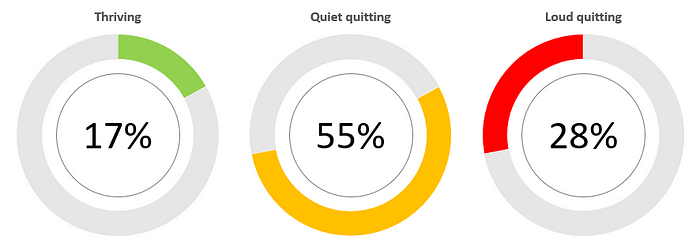
The survey revealed an overall eNPS of +23, comprised of 47% promoters, 29% passives and 24% detractors.
This is a huge problem for Kenyan businesses as over 50% of the workforce does not have a strong emotional attachment to their company.
Almost a third of the respondents (passives) have quietly quit. They are physically present at work but have mentally checked out. They are putting in minimal effort and are psychologically disconnected from their workplace.
Detractors are employees who take actions that directly harm the organisation, disrupting its culture, undercutting its goals and opposing its leaders. They negatively impact the productivity and engagement of other employees, leading to lost customers and revenues.
This is echoed by Gallup’s State of the Global Workplace 2023 Report that revealed 83% of Kenyan respondents were disengaged and detached from their workplace:
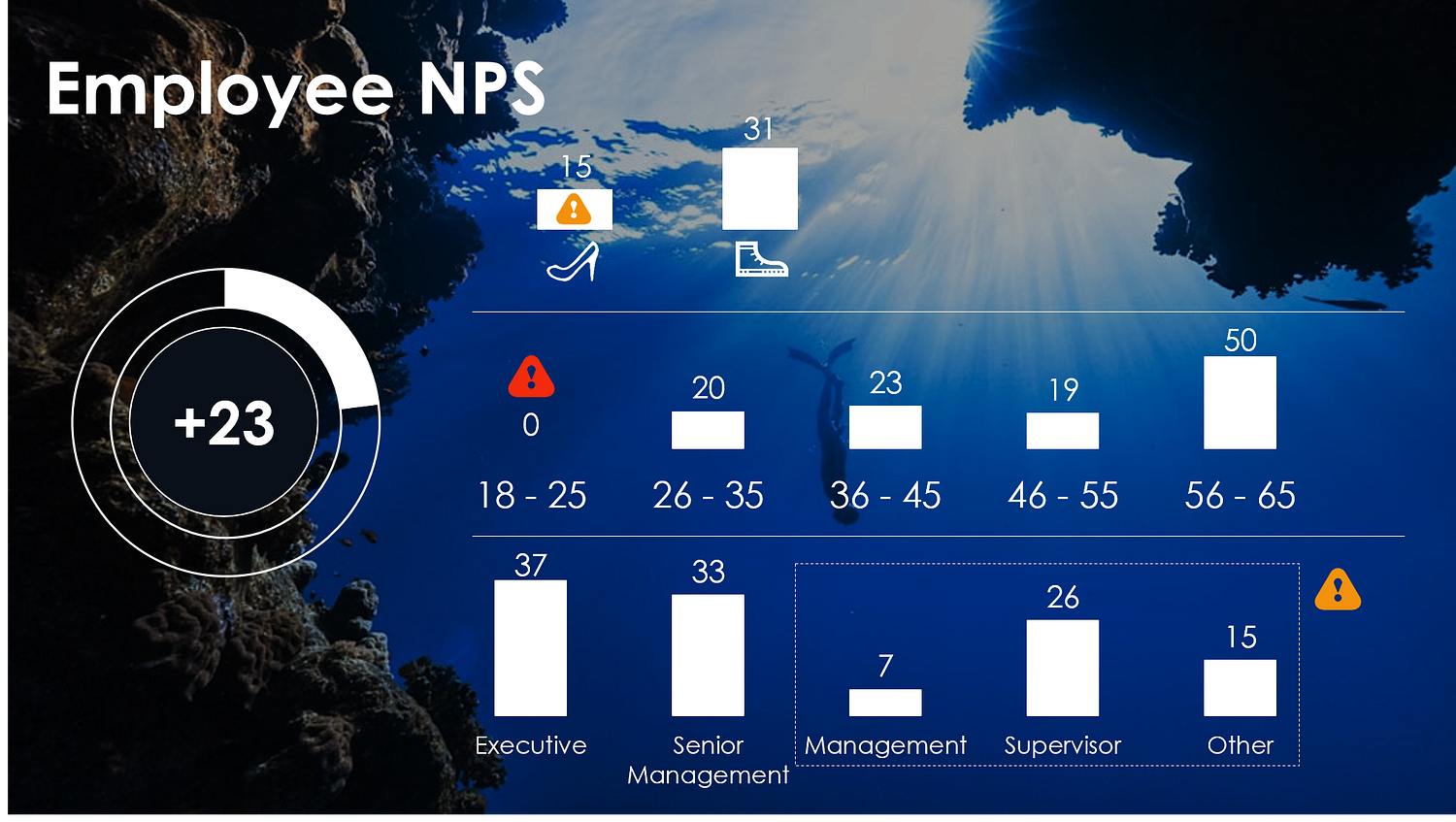
Diving into eNPS variations through various demographic lenses uncovered some startling findings:
- Gender Disparity: Despite progress in DEI, there’s a noticeable disparity in experience and opportunities for female employees who recorded an eNPS of +15 compared to male respondents who recorded an eNPS of +31.
- Generational Differences: The Gen Z segment recorded the lowest score of 0, trailing behind Boomers, Gen X and Millennials. With Boomers recording the highest eNPS, does this mean that Kenyan businesses are antiquated and are still operating as they did decades ago? Gen Z will soon surpass Millennials as the most populous segment in the workplace. Therefore organisations must grasp the value systems, needs and challenges of different employee segments and what makes them tick.
- Role-Based Disconnect: Executives and senior leaders report significantly higher eNPS than others. This suggests a perception gap; with the leadership team disconnected from the broader workforce.
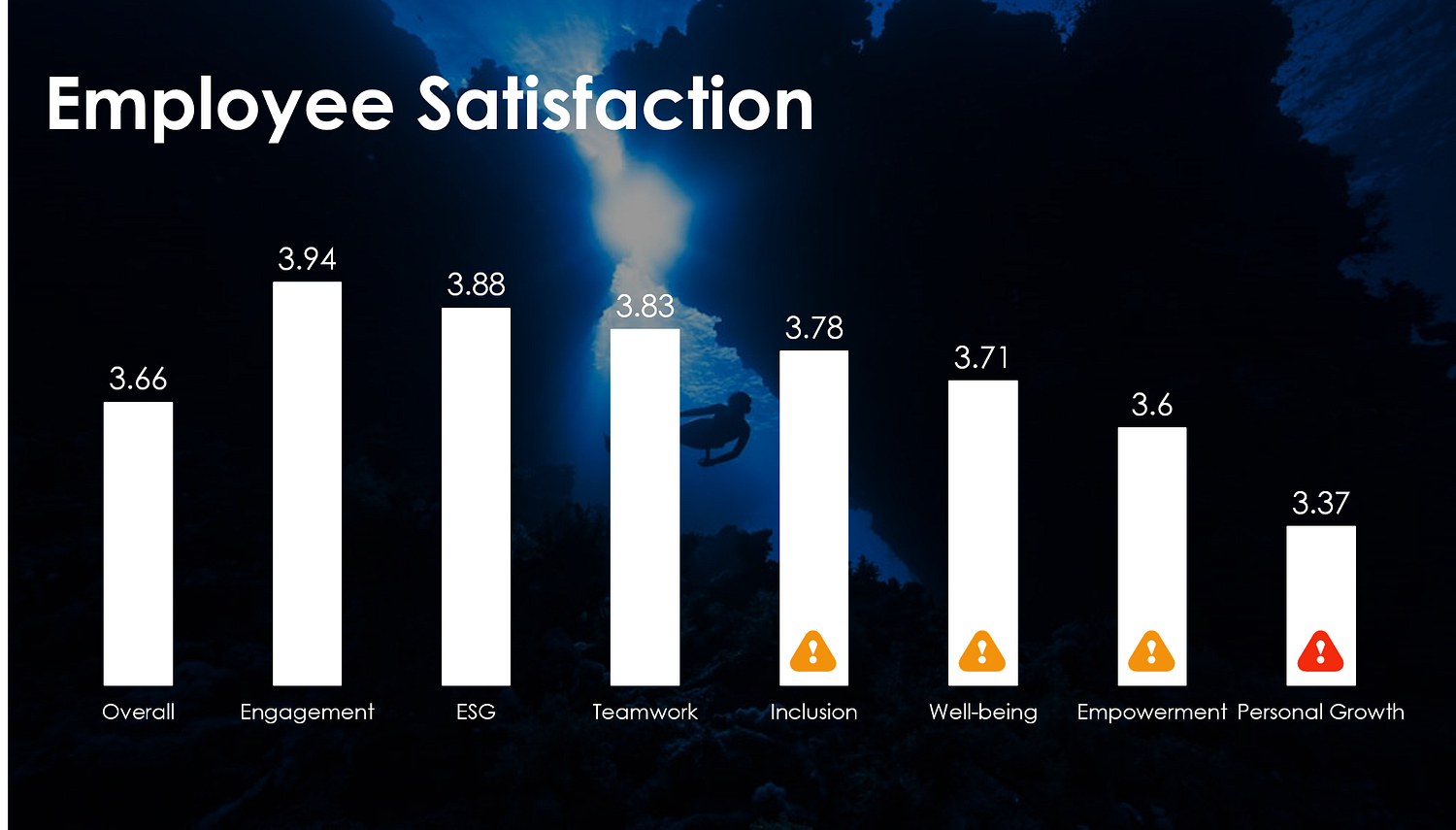
An overall eSAT of 3.66 (73%) indicates room for improvement, especially in areas of:
- Empowerment and Growth: Employees seek inclusion in decision-making but want to be empowered in a supportive “fail and learn” business environment. Organisations need to provide more opportunities for growth, mentorship and training.
- Recognition and Appreciation: Organisations need to improve in acknowledging and celebrating employees who deliver exceptional customer experiences.
- Work-Life Balance and Wellness: Organisations should prioritise work-life balance and provide resources for physical and mental well-being.
Key action areas for business leaders:
- Understand Employee Needs: Grasp the values, needs and challenges of different employee segments; especially Gen Z.
- Unlock the Voice of Employee (VoE): Bridge the perception gap between senior leaders and the broader workforce through active VoE programs. These will help leaders listen, respond and react to employee concerns, feedback and ideas.
- Diversity, Equity, and Inclusion (DEI): Provide more inclusive and equitable opportunities across the workforce.
- Empowerment and Growth: Provide opportunities for learning and development, allowing employees to acquire new skills to progress in their careers and contribute meaningfully to decision-making.
- Recognition and Appreciation: Acknowledge and celebrate employees who deliver outstanding customer experiences.
- Work-Life Balance and Wellness: Prioritise work-life balance and employee well-being, providing resources for physical and mental health.
2. Better alignment with CX
Sound bite: “It is so gratifying that my work has the potential to impact so many lives. I would want to see much more investment in CX initiatives.”
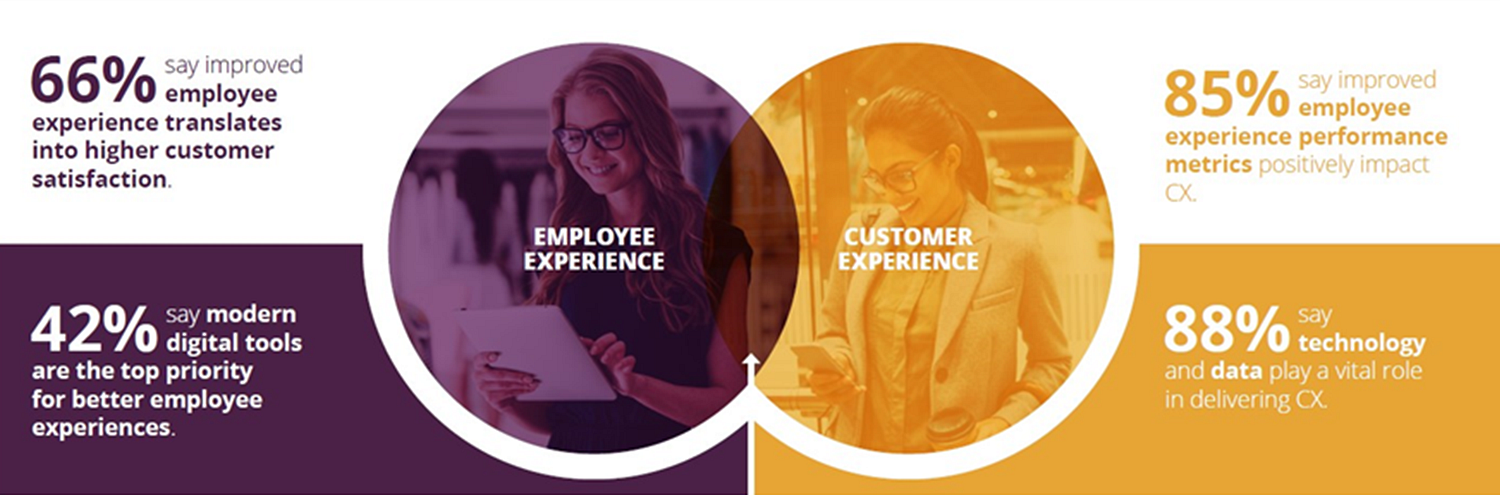
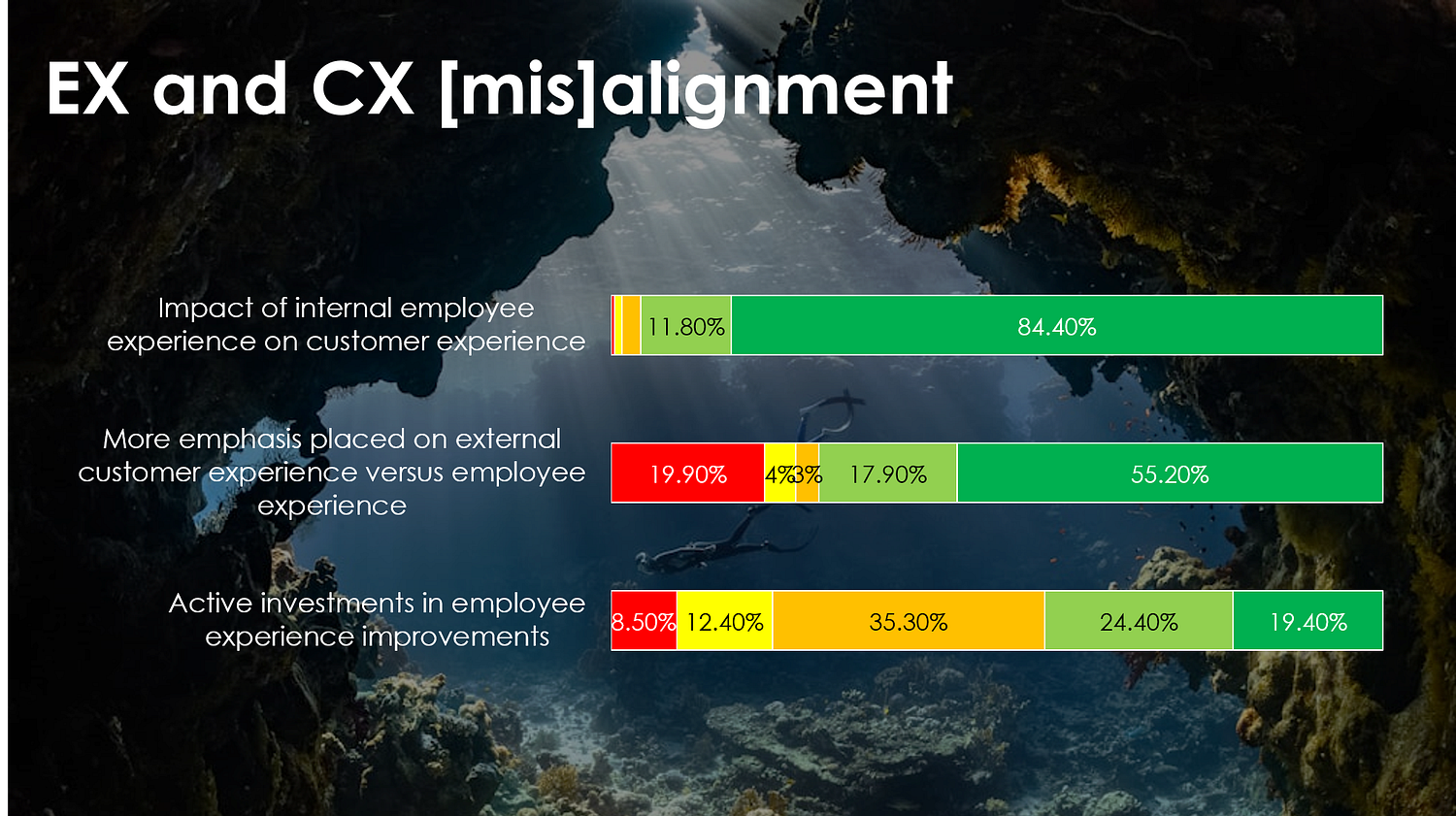
Various global surveys have indicated a direct correlation between EX and CX and this was strongly echoed by the survey respondents. However, respondents indicated that their organisations still place more emphasis on external CX and there are less active investments in improving EX.
Key action areas for business leaders:
- Customer and Employee Centric Approach: Organisations should prioritise customers and employees, aligning CX and EX initiatives for better synergy.
- Strategic Focus on CX: Place CX at the core of corporate strategy, fostering a customer-focused mindset and behaviours among employees.
- Digital Transformation: Utilise data and technology to boost the customer experience, focusing on refining and optimising processes, procedures and systems.
- Voice of Customer (VoC) Programs: Proactively gather and act on VoC insights. Enhance responsiveness to customer complaints and feedback.
3. Stronger culture
Sound bite: “Many remain trapped in toxic work environments thinking they will change the environment or the environment will change for the better in future, not realising that it is taking a toll on their mental and emotional well-being.
When asked to sum up their organisation’s culture in three words, respondents revealed a range of cultures:
- Employee (and customer) centric: Words like “fun”, “caring”, “empowering”, “inclusive”, “diverse”, “collaborative” and “customer-focused” highlight that many companies are providing a supportive and upbeat atmosphere for their employees.
- Traditional vs Dynamic: Words like “hierarchical”, “bureaucratic”, “siloed” and “formal” point to conventional structures, while “energetic”, “disruptive”, “creative”, “progressive”, “forward-thinking”, “agile” and “innovative” suggest a more dynamic approach.
- Challenging Cultures: Negative words such as “toxic”, “unsupportive”, “micromanaged”, “discrimination”, “aggressive” and “manipulative” indicate areas needing improvement for a healthier and more positive work environment.
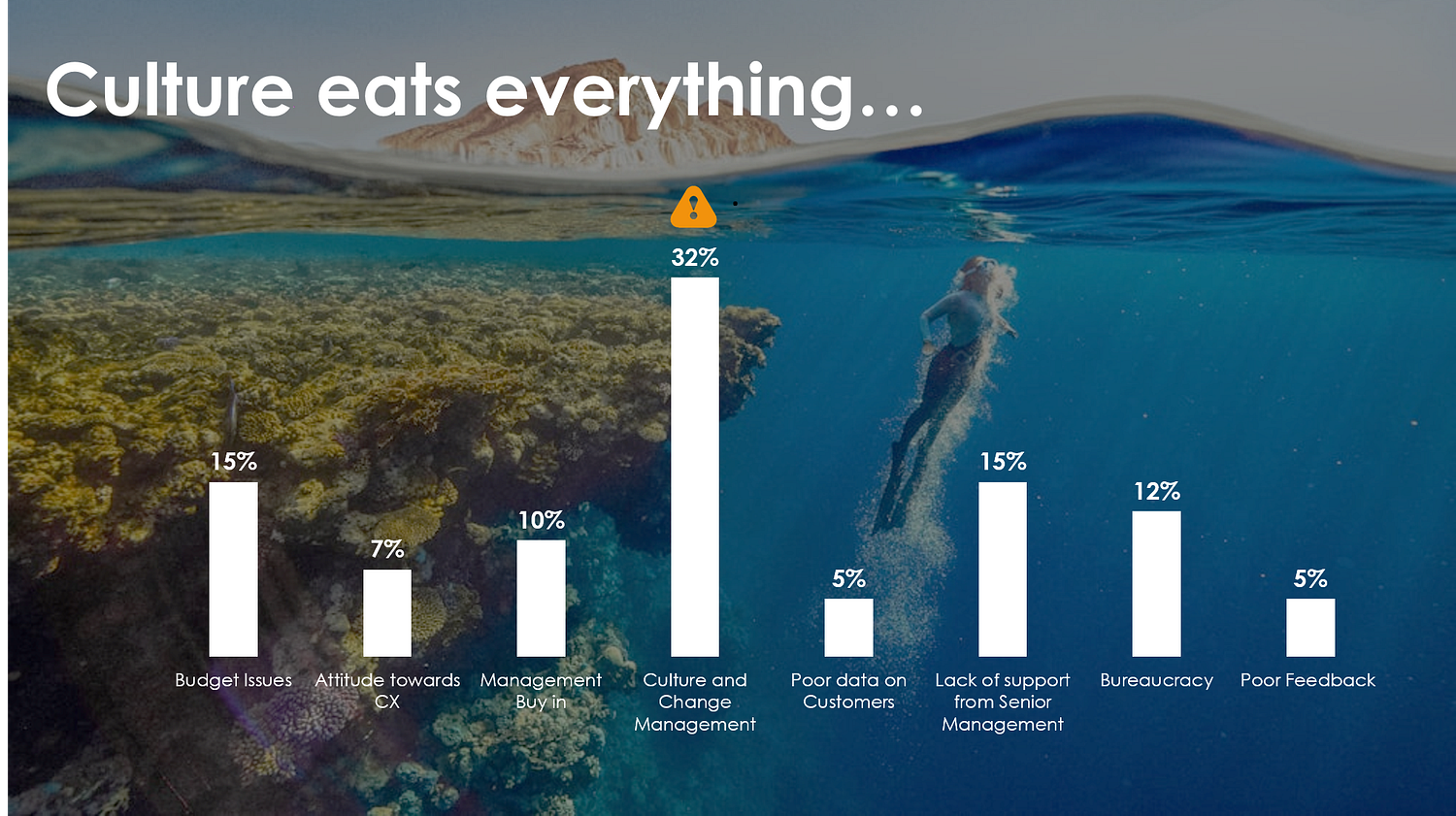
A robust organisational culture is essential for any company to elevate its customers and employees.
Key action areas for business leaders:
- Simplifying structures: Reduce bureaucracy and red tape to flatten organisational structures and foster open and transparent communication.
- Encouraging inclusivity and collaboration: Cultivate an environment that embraces diversity, fosters collaboration, stimulates innovation and encourages knowledge-sharing across the organisation.
- Focussing on Accountability and Meritocracy: Promote accountability and implement merit-based decision-making and performance evaluations.
- Creating a Unified Work Environment: Build unity and align goals across departments and subsidiaries through team-building activities and creating an enjoyable work atmosphere.
4. Aspirational leadership
Sound bite: “There is an open door policy and everyone can express themselves without fear of intimidation. Everyone is listened to.”
Key action areas for business leaders:
- Lead by Example: Cultivate a culture centred on empathy, compassion and approachability and values open communication, collaboration and employee well-being. Encourage constructive feedback, recognise achievements and promote a healthy work-life balance.
- Build Relationships: Establish and nurture open communication channels to strengthen organisational connections. Nurture effective and transparent dialogue between leadership and employees across all departments and levels.
- Focussing on Accountability and Meritocracy: Promote accountability (especially for employees in a leadership role) and implement merit-based decision-making and performance evaluations. Encourage empowerment, delegation and accountability at all levels within the organisation.
In conclusion
The world of work is transforming, with organisations grappling with challenges of ever-evolving uncertainty and complexity. Just as customers consume your brand’s products and services; employees consume your brand’s culture and workplace.
To achieve success, leaders must pay attention to both. The insights from this survey highlight a critical gap. Businesses put significant focus and investment on external customers. However, with over 50% of respondents not emotionally attached to their workplace; there’s a lot more work to be done:
- A thriving “customer-centric and employee-first” culture coupled with aspirational leadership is the bedrock for any company to prioritise both customers and employees.
- Leaders must grasp the values, needs and challenges of its employee segments; with Gen Z posing unique challenges.
- Employees seek accountability, empowerment and inclusion in decision-making but require growth through mentorship and training.
- Employees want recognition for delivering exceptional customer experiences.
- Employees need better work-life arrangements and resources to manage their physical and mental well-being.
By actively improving and investing in employee experience, organisations will reap the benefits of a happier and more productive workforce that will ultimately drive business growth.