Customer Experience x Data Privacy — a symbiotic relationship
By Akshay Shah
How can Customer Experience (CX) professionals navigate the delicate balance between creating outstanding experiences and respecting privacy? This article explores this crucial challenge, offering practical tips for building trust through transparency and data control.
With great power comes great (data) responsibility
Picture this: You’ve just delivered an outstanding experience to a new customer and you’re eager to follow up. Perhaps you’re considering sending personalised promotions, requesting feedback or engaging them through WhatsApp. It seems like standard practice in CX or marketing. After all, a seamless and personalised customer experience that is relevant can make or break your business.
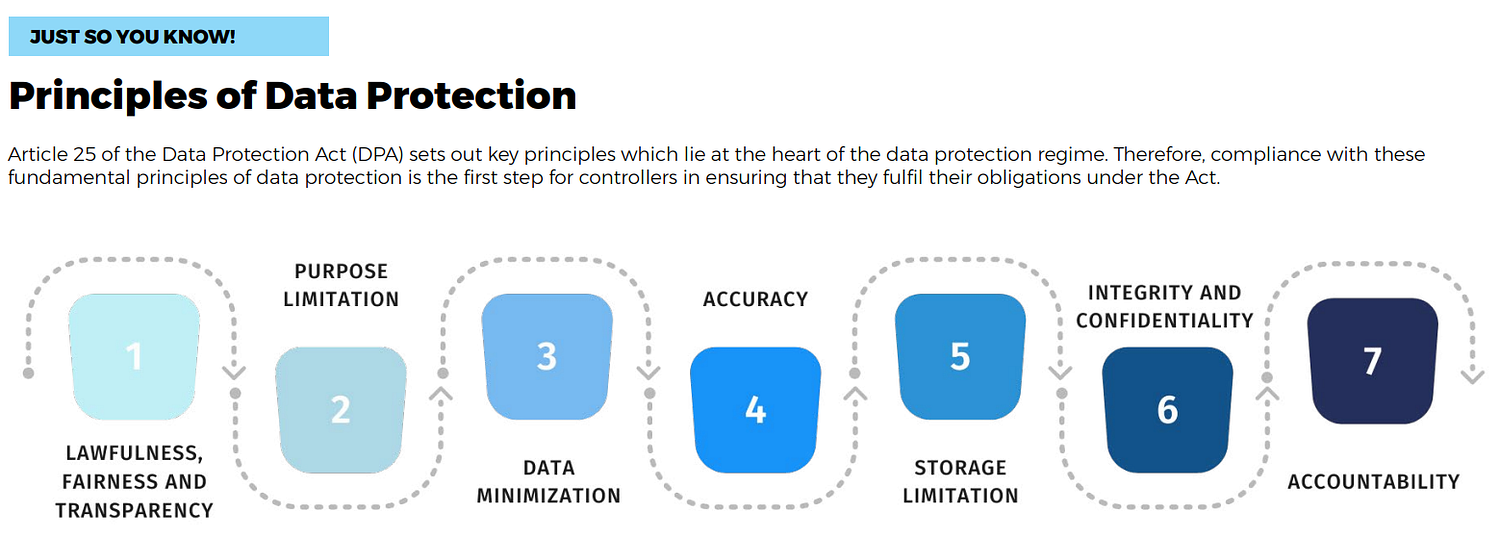
The Kenyan Data Protection Act emphasises the importance of data privacy, making it essential for brands to find the delicate balance between leveraging data to enhance CX and safeguarding trust.
To Personalise or Not to Personalise
Personalisation hinges on data. Understanding customer preferences, behaviours and needs is paramount to delivering experiences that set your brand apart.
However, the line between personalised and intrusive can be dangerously thin.
Consider McDonald’s UAE, which sent a thoughtful note and a free meal to a customer who ordered from a hospital. While this might seem like a great example of personalisation, it raises eyebrows on privacy boundaries.
Closer to home both the Office of Data Protection Commissioner and the Communications Authority of Kenya are reporting increased confidentiality and privacy complaints (click on the links to read more about these complaints). This trend underscores the growing concern among Kenyan consumers about how their data is being used.
The CX practitioner’s role in building trust through clarity and transparency
Courtesy of ODPC
Clarity and transparency are crucial as consumers become more conscious of their data privacy rights. Here are a few practical steps to help you build trust while complying with data regulations (let your DPO and technical teams worry about the implementation details):
1. Be transparent about data collection
Be upfront with customers about what data you’re collecting and why. An example of this could be displaying clear, jargon-free privacy notices on your website and app.
Obtain consent or other legal basis for processing their data.
Disclose the use of AI in automated decision-making, such as credit scoring, to your customers.
2. Be honest about retention and data sharing
Let your customers know how long you will keep their data.
Inform them if you’re sharing their data with any third parties and why.
An example of this could be to include a simple infographic explaining your data lifecycle and sharing practices within your privacy notice.
3. Offer control
Limit the amount of personal data you collect.
Empower your customers with control over how they opt in or out of services and data usage.
Allow customers to request copies of their data, make updates, or even delete their information. This empowers your customers and helps reinforce trust in your brand.
4. Demonstrate data security
Data breaches can erode trust quickly. Continuously reassure customers that their data is protected with strong security protocols.
If customers trust your brand to safeguard their information, they’ll be more likely to share their data, creating opportunities for personalisation.
CX and Privacy: A symbiotic relationship
It’s easy to think of data privacy and customer experience as opposing forces, but they don’t have to be. They work best when they support each other. Here’s how you can turn this challenge into an opportunity:
Collaborate with your DPO: Have a regular coffee with your DPO and talk about how your brand can create experiences that are both personalised and privacy-compliant.
Educate your team: Ensure your CX team understands the importance of data privacy and how to handle customer data responsibly. Ensure data privacy and reputation management are agenda items in your CX huddles and a component of your CX strategy.
Use privacy to differentiate your brand: Communicate your commitment to data privacy as a key brand value.
Continuously improve: Regularly review and update your data practices based on customer feedback and evolving regulations. Do this with your DPO — remember you wear the customer’s hat while your DPO wears the regulator’s hat!
Now is the time to re-imagine CX — not just as an avenue for personalisation, but as a pathway to to create privacy-conscious experiences that elevate your brand and build enduring relationships. Remember, trust is valuable … protect it wisely.
Disclaimer: This article provides practical tips to help you navigate the tricky waters of data privacy. But remember, we’re not your legal lifeguards! For a deep dive, consult your trusted legal counsel before making any waves.
We’d love to hear your thoughts! What other practical tips do you have for balancing CX and data privacy? Share in the comments below.
Personalization and Hyper-Personalization
We have all gone through some type of personalization as we carry out our day to day operations. Ever walked into your favorite restaurant or coffee shop and even before you order, the waiter identifies you and knows your preferred drink or meal? We could say that’s how it all started.
Personalization uses basic customer information like name, location or gender to tailor recommendations, messages or adverts that appeal to the customer’s preferences, behaviors, and needs.
They say the devil is in the small details and in this ever changing era of technology, personalization is not enough; and here enters Hyper- Personalization.
Hyper-personalization is the customization of digital content based on individual behavior.
It’s far more advanced, going a step further by tailor making products, service and experiences; taking into account customers’ needs and wants by leveraging real-time behavioral data, advanced analytics, and artificial intelligence.
An example of Hyper-personalization may look like: You have probably gone to a website or an App and started your purchase journey, added items to cart but didn’t quite complete the order. After a while, you may get a notification or email inviting you to go back and complete the action.
How to Hyper-Personalize Customer Experiences:
Automate: It is not possible to manually collect all the customer information required for hyper-personalization. It is therefore important to invest in a customer relationship software that will collect, store, and analyze customer data. The information will be used to create personalized marketing campaigns which will assist in offering hyper-personalized experiences.
Artificial Intelligence: This technology is able to analyze huge amounts of data in real time, learn from customer behavior and preferences providing accurate and relevant content over time and help in creating personalized suggestions for individual customers.
Data Analytics: When it comes to hyper-personalization, data is everything. It is heavily reliant on real-time data analytics to collect and analyze customer data, i.e. browsing behavior, purchase history, and demographic information.
This information is then used to create a full picture of the customer’s needs and interests.
Benefits of Hyper-Personalization:
Improved Customer Experience: Customers today are overloaded with information in the various channels they patronize when shopping and they now seek for content that appeals directly to them.
The Hyper personalization engine can identify what customers are looking for and display to them, the best possible match. This makes shopping less frustrating and more exciting.
Increased Customer Engagement: Hyper-personalization uses real time data which enables an organization to get valuable insights about the times users are most active and most likely to engage with your content.
Coupled with messaging and products relevant to the customers’ needs and interests, you can configure recurring campaigns, while scheduling them on specific days and time enabling the company to reach customers at a time that they’re most likely to be online.
Increased Customer Loyalty: Customers are likely to remain loyal and return to make repeat purchases when they feel that a company understands their preferences and needs.
This article has been written by Ms. Jackie Wahome,Customer Experience Trainer, Customer Centric Kenya.
Leveraging on the Power of Social Media for Business Growth – With Angelica Mbandu – CX, Consolidated Bank
I was running late for the study tour at KCB which was meant to start at 9.00 am. On my way I bumped into Riham Taib – Customer Rewards and Loyalty Manager at CBA bank. We had a small chitchat as we were shown to the venue by the security guards at KCB Bank. Service surely does start from the door as the guards meticulously did their security checks and gave us our tags, granting us entry into the Magnificent KCB.
On arrival at the venue on 4th Floor, we are warmly welcomed by Diana Othieno, Retail Service Experience Manager. The training room was full of Customer Experience Champs from different institutions. They were all smiles and warm as is custom of Customer Experience persons. Talk ensued as we caught up with the happenings in the industry over some tea and snacks.
The session kicked off with an introduction from Ms. Benta- Board representative at ICX. Her job was really to reiterate the importance of Customer
Experience as a whole and gear members and non-ICX members up for the upcoming ICX conference.
The Entire KCB Customer Experience team went ahead to introduce themselves. Very pleasant people I must say. The main session was conducted
by Diana Othieno and Oliver Sang- Channel Experience Manager. Now Oliver was all kind of interesting. But the main talk and discussion was around social media management.
Some take outs from my end: Training is Key : Keep up skiling your staff on new products and new happenings within the institution/company. Give your audience Dopamine : Feel good reasons as to why they should stick with you.
Read more from the CX Connect Volume 18 Newsletter Read more
Are Kenyan Politicians Giving Citizens the Customer Experience They Deserve?
An extremely unhealthy culture is taking root in the Kenyan political arena, as recently witnessed from our politicians easy on the lips with insults and abusive language targeting their opponents. Institutions and leaders including the presidency have not been spared this communication circus! The presidency for example is an office that must be respected as a symbol of national unity. This behaviour is disrespectful both to the object of the politicians abuse, as well as the electorate, who are forced to consume these unsavoury statements.
As an electorate we should demand responsible utterances from our leaders and respect for our institutions. We must not allow this unacceptable culture to get entrenched. While the law must be enforced against such irresponsible politicians, our vote as an electorate should also indicate our intolerance for politicians’ misconduct in addition to electing our preferred leaders. Just like unhappy customers who vote with their feet taking their business elsewhere, we should cast our vote away from vile politicians.
The International Customer Service Week is here with us – the first week of October of every year! Customer loyalty and patronage is celebrated globally across customer-centric organisations. Throughout this week such organisations plan impactful initiatives to demonstrate to their customers that they value their patronage. In tandem with this global campaign, one of the key principles of customer experience is delivering of promises made to customers, and meeting the customers’ expectations.
For the Kenyan politician, every election cycle brings intensified campaigns with many promises made to the electorate by politicians on the campaign trail. These promises shape the voters expectation of service delivery should the politician be elected. Regrettably campaign pledges have proved to be mere rhetoric in many instances, as several remain unfulfilled once the politician is elected. These same ‘ambitious’ Kenya politicians return shamelessly at each election to seek a new political mandate. The resultant effect has been millions of shillings spent campaigning and trying to convince voters for a new mandate, with frequent allegations of voter bribery.
If voters just like customers are to vote strictly based on service delivery and met expectations, then the customer experience-angled politician should have an easy time at the ballot. The voter will not require much convincing. Having sent their child to the nearby CDF-built school, received affordable and available drugs from the CDF dispensary using a boda boda on the smooth CDF-built and tarmacked road and swallowed their medicine with clean CDF-financed piped water – surely they would believe the aspiring politician’s claim that if elected, the CDF dispensary will be upgraded to a level-5 hospital.
This should be an easy vote to garner. Politics and customer experience are directly linked as far as meeting the customers promise is concerned. For politicians of integrity out there, customer experience ought to be at the heart of your campaign, as you deliver on your promises, prove you are both reliable and responsive to the electorate’s needs.
For every customer in Kenya, whether consuming government or private services, this is a season when attention is equally divided between Customer Service Week and politics. The electioneering period is not over with repeat presidential elections only weeks away following the historic Supreme Court ruling that nullified the August 8th 2017 presidential elections. This week in Kenya therefore lends itself very well to consider Customer Experience and the Politician. Every customer must think about their leaders and whether there are getting the customer experience they deserve.
Delivering on promises consistently builds trust and credibility and enhances loyalty attributes that are central to the both customer experience and politics. Politicians, who often tend to break these customer experience rules, could lose both the electorates trust and credibility entirely. Their credibility is suspect and a number resort to political propaganda, mud-slinging and character-assassination of political opponents to gain political mileage. This is a fragile and unsustainable platform upon which to build a political foundation. Discerning electorate easily see through these shenanigans and make their voice heard through the ballot. Politicians akin to customer experience practitioners ought to build their political careers based on building genuine trust and credibility with the electorate, built upon a reputation of tangible and visible delivery on promises made.
Outstanding politicians of repute will be distinguished by their level of personal and political maturity, respect for the electorate, similar to the customer experience principle of respect for customers. Respect and maturity can be demonstrated in responsible utterances irrespective of political persuasion. We are becoming increasingly politically savvy as a country and customer experience principles will progressively take centre stage in shaping our expectations and whom we elect to lead us. Politicians who embrace these principles will have an easier time at the ballot than those who opt for mere rhetoric and politicking rather than service delivery.
As we celebrate International Customer Service week, our recognition and appreciation goes out to all politicians reputed for outstanding maturity, service delivery, credibility and integrity, and who genuinely show respect for their voters. Which of our politicians can stand up to be counted?
Benta Okinyi-Aseto – a Board member with the Institute of Customer Experience Kenya (ICX Kenya) and CEO of CELCOS Africa Limited, has had extensive experience as a leader and practitioner in the area of Customer Experience.
Customer Experience Emerges as the New Battlefield for Companies
Kenya has been earmarked as one of the leading emerging economies in Africa to invest in. We are seeing an increasing number of international companies enter our market, many of who actively monitor, review and improve customer experience as part of their strategic agenda. We have various corporate clichés attached to the customer from “the customer is always right” to “the customer is king” and yet many companies still fail to provide adequate customer service, let alone exceptional customer experiences. If our local and regional companies don’t start thinking about and investing in improving their customer experience, they are going to come out a sore second on the corporate battlefield.
Companies globally are investing significantly in customer experience. According to Gartner, 89% of companies surveyed plan to compete primarily on the basis of customer experience. So why are companies investing so much to improve their customers’ overall experience? To put it simply, customer experience directly impacts a company’s top and bottom line. If your customers love doing business with you, they will become your promoters and these are the types of customers that every company should nurture.
Promoters happily recommend you to family, friends, and colleagues and even complete strangers through their personal networks, reducing a company’s customer acquisition costs. Promoters are also more likely to maintain longer term relationships with you and ultimately buy more products and services over time. They are less likely to defect (even when there have been serious issues) and are more willing to provide constructive feedback that could help you to improve your business and directly contribute to increased revenues or decreased costs.
If you look at it critically, promoters are also less costly to serve. Consider how much a disgruntled customer could cost you even before they exit the relationship – they call your help lines, inundate you with messages, potentially cause negative publicity on your social media pages, file support tickets, return products and demand refunds. If you were to put a shilling amount to each one of these instances, the real cost could be significant. Disgruntled customers may not even tell you about their negative experiences and will simply move their business elsewhere. According to Ruby Newell-Legner’s ‘Understanding Customers’, a typical business only hears from 4% of its dissatisfied customers and 91% of the remaining 96% never come back.
Herein lays the gap.
Kenyan businesses – especially those serving mass consumer markets – need tools that would allow them to collect qualitative and quantitative feedback directly from their customers, helping them understand what they are doing well and where they need to improve. On the other hand, customers need a space where they can easily compare and contrast companies based on their customer service, and also where this data can be analysed to produce meaningful insights that will drive improvements from the same companies. This will result in quicker and better purchasing decisions, as well as improvement of customer service levels, ultimately giving the customer better value for money.
In essence, digital tools have the ability to put power back in the hands of the consumer. Are our companies ready to invest and plan guided by authentic user-generated reviews? They have no choice if they hope to survive!
Article written by:
Akshay Shah is the founder of Custometrix Ltd and ratemyservice.co.ke.
The Future of Customer Service is about Experiences
Every organization today seeks to gather as much information about a customer as possible. By walking into an organization or just making a phone call, you hardly realize just how much personal information you have left behind. While everyone loves to talk about the significance of data and technology, we still are yet to completely bridge the gap between collecting the data and designing experiences based on this data, or have we?
As a customer care practitioner, I interact on countless times with customers. The reality is that a new dimension of customer experience is here, driven by the endless demands of customers for smarter, faster experiences. Technology has made it easier for us to track customer preferences and history and to utilize customer data to establish trends and actionable insights. By the time a customer contacts us with a query, we already have most of their information. Imagine what an amazing experience it is for me and you (as customers) to discover that we can get assistance without having to go through a series of boring questions and answers! This is what I call creating stories that do the talking for you. Customer experience is a story and not just a long boring list of touchpoints. Let’s assist our customers to write better stories.
A rigid attitude should be eliminated if we must deliver great customer experiences. I believe that taking care of our customers is not just the right thing to do, it’s good for business. Today’s customer says “it’s my right to demand great service at every interaction.” Unless a company wants to be recognized as a low-cost provider, the value proposition of good customer service can make price less relevant. This concept is not limited to retail. It crosses into all types of businesses and industries.
The list may be endless however here are some of my key ingredients to provide inspiring customer experiences:
• Keep it simple and personalized. Let each experience be unique even if it relates to the same customer.
• The experience must have a social and empowering feature in it. Modern self-service tools build powerful knowledge bases.
• It must be compelling, smart and consistent for it to bring out the WOW effect. Let it not appear like some well written script performance.
• People are emotional beings and they expect customer service to be authentic and human. We need to develop unique approaches for dealing with different emotions across customer segments.
• Focus should be on customer success. Establish and make it visible, the link between customer success and organization success.
Market research and analysis of big data has played a key role in helping me to stay in tune with the customers I serve and to keep up with market trends. Our GIS technology has enabled us to continue building a customer – centric approach where our products are offered based on feedback from our customers.
Deriving useful information from big data is the next big frontier being mined by organizations in search of trends and patterns that support informed decision making. Ultimately, it’s those simple acts that if done consistently will form superb service and help win a customer for life.
Article written by:-
Hellen Omondi,
Customer Service Representative,
Esri Eastern Africa.
You Can Make a Difference
Imagine a client walking into a passport processing office to apply for renewal of her passport. The process starts online and she has all the requisite documents. A big sign at the entrance shows that it takes 5 working days for a passport renewal to be ready which puts a smile on her face. She goes in, picks a ticket and waits for her turn. After about 10 minutes, her ticket number is called. She goes to the counter where a young lady checks her documents, confirms that they are in order and sends her to another queue to have her picture taken. This is done within minutes after which the photographer advises her to check for her passport within 2 weeks.
This is where the problem begins.
“But the sign at the entrance said it will take only 5 days!” She mentions to him
“Kuna backlog. Wewe kuja after 2 weeks” (We have a backlog so come after 2 weeks) he states as he starts serving the next client.
She sighs as she puts a reminder on her phone. She waits 2 weeks and a day just to be sure she will not be disappointed. However on going back to the collection point, she is informed that the passport is not ready. She asks when she should come back and is told to come the following week. She asks the staff member serving her if they are sure that the passport will be ready by then, to which she receives a response to just come and check because they cannot tell. She further asks how else she can know the status and is, and is told to try calling or checking through their social media pages. Later she engages them on their twitter page where she is asked for her tracking number so that they can check on the status and advice. She gives them the tracking number but no response is forthcoming. It takes another 4 weeks of calls, visits and tweets to get her passport…
Now imagine another scenario where a client has a motor insurance policy with his insurance company. He gets involved in an accident and calls the company whose staff guide him on what to submit when filing the claim. He follows through and sends the claim forms. In the meantime, his car is at the insurer recommended garage for repair. He waits one week before following up only to be told that he had not submitted a form that was required. He explains that this was not in the original list communicated, and is told the claim cannot progress without it. So he looks for it and submits it, all the while complaining about the delay and lack of communication. He waits another 3 days before calling again to find out the progress. He is advised that the assessor was scheduled check on the damage on his car the next day.
The client then asks why there was a delay and is given an explanation that does not hold water. The next day he goes to the garage to ensure the assessor checks his car. By 3 pm there is no sign of the assessor. On calling his insurance company to complain, he is advised that the assessor will be there before 5pm. The assessor arrives at 6pm, checks the damage, does his estimates and says he will send the report by the next day. The client waits another 2 days before following up only to be told that the report has not been received but that follow up will be done…. By the time the report is received, the repairs authorized and done and the car released, the client has made dozens of calls to push the process along and has sworn that as soon as the claim is closed, he would be changing insurers.
These are the scenarios we and our clients face every day as we interact with government centers, and both public and private service providers and companies. The frustrations are endless. Delayed service, rude staff, timelines that are not adhered to, inaccessibility of account handlers, fake promises, requests for bribes in order to speed things along, and many more are the order of the day. Depending on how we handle the frustrations, we can threaten to leave the company, cancel an order, ask to talk to the manager, or pay to accelerate the service or even vent on social media.
Most of us here reading this blog, are in a position to help these clients in one way or another. It could be through being their point of contact and keeping them updated in order to save them trips to your offices; it could be through assuring them that a solution will be given by a certain date and not breaking that promise; it could be through listening to the customer as they vent and not tuning them away without an answer; or it could be through giving them access to the decision makers who can hasten a resolution.
Think about your role and what you can do whether big or small to assist the client that you interact with. Empathy is putting oneself in another’s shoes… so empathize with your clients and do to them what you would want done to you if you were in a similar situation. Obviously the ideal would be to get to a place where our clients do not have to make a follow up in the first place, but not too many of us work in those ideal environments, so my challenge out to you is this – You Can Make A Difference! Choose today and every day to give great service to each and every client that you serve and if you are at a supervisory level then have your team understand the difference that they can make and work with them to do so.
If we all do this our lives and those of our clients will be a little bit better. Choose To Make A Difference!
Judith Bogonko Juma
Head of Customer Service
APA Insurance
Centennials Redefining Customer Experience
Generally speaking, I wear the millennial badge proudly because that is the generation that I belong to. Millenials are born roughly between 1980 and 1995.
Recently while at work, I asked a customer for their ID number and on their responding, I mentally compared that to my ID number and all I could think was wow! We have a new generation that has attained the age of majority in recent years. Who are they? What are their characteristics and idiosyncrasies? What are their expectations? How do we best serve them?
Enter Cen·ten·ni·als /senˈtenēəls/ also known as Post Millenials, Generation Z or iGen and they are born roughly between 1996 and 2008. Centennials are digital natives meaning that they are born or brought up during the age of digital technology. They typically do not have to wait until after high school to go for “Computer Packages.” Because they are comfortable with technology from an early age. Their interaction with social media forms a significant portion of how they socialize. They typically access technology, mobile first. This probably explains why they write emails in SMS language, but I digress, that’s a story for another day….
Centennials are set to be one of the most interesting generations of customers for organisations to engage with. This is primarily because their expectations are higher, they have greater desire for information and have shorter patience levels. Sound familiar? Technology has empowered them to make decisions and find solutions independently whereas the opinion of their peers or mentors on digital media heavily influences their choices and decisions.
So how do we engage them?
1. Mass Personalization
Did you know that studies have shown different parts of the brain light up when someone hears their name over others? Well, in mass personalization we are talking about how we can take information collected on a day to day basis [Big Data], package it and deliver back product and service information that is targeted and made personal for the right individual in the right place and at the right time.
Mass personalization got its start primarily in email campaigns. Here, it is common to have a {NAME} field, where each recipient’s first name, instead of a generic subject line or salutation is inserted into the email customers receive. Mass personalization is now also commonly used in e-commerce. This also works well for SMS messaging because people like hearing and reading their own name. Hopefully they don’t have long names like Nebuchadnezzar which would take up most of your space in the 160 characters that you are working with for an SMS…. All the same, when used effectively, mass personalization can lead to a better customer experience.
2. Omni Channel Presence
Single touch points do not work for Centennials. They want options but they also want to move across these touch points seamlessly. For instance; start a conversation on Social Media, continue on Email, conclude with a phone call or walk in without having to repeat themselves at every single touch point. Here is the thing; they could do multiple touch points for the same issue on a single day. Sigh!
3. Provide Answers
They want answers now. What does that even mean?
First, ever wonder why centennials like emojis J, memes and acronyms like SMH, IMO etc.? That is because they suffer from short attention span due to information overload. They are not reading your 3 page terms & conditions written in font size 2; sorry. Short frequent communication works best.
Then, redefine feedback. What. Is. A. Feedback. Form? For Centennials, feedback is not an event scheduled monthly, quarterly or annually. Feedback is an everyday occurrence on the public timeline of your corporate social media handle. If you are lucky, you might get a Direct Message [DM]. Deal with it on a daily basis as it comes.
And, do not take yourself too seriously all the time. Occasionally loosen up on your responses especially if your target audience age is 18-35 years old…
In spite of everything, we have to make effort to ensure that the products and services offered by our organizations are easily accessible and understood by Centennials. What we offer them should be relevant; practical and value-conscious. Centennials relish experiences and use the vast amount of information at their disposal to discover distinct stories. Maybe we need to ask ourselves what their moments of truth are, if we understand these, we just might get their attention and make them excellent brand ambassadors who will then in turn use social to spread the word.
Article written by Wavi Muigai Head of Corporate Communication & Customer Experience Higher Education Loans Board, Kenya
Customer Experience Explained
Customer experience (CX) can be explained as the entirety of interactions a customer has with a company and its products or services. This includes a customer’s perception, their rational, physical, emotional, subconscious, and psychological interaction with the company’s products, services and employees.
This perception affects customer behavior and builds memories, which drive customer loyalty and affects the economic value attributed to an organization.
Product or service awareness, discovery, cultivation, advocacy as well as purchases and service are some points of interaction that contribute to a customer’s experience.
Customer experience plays a vital role in an organization, this role includes
Improving customer satisfaction
Fostering repeat customers and customer loyalty
Increasing customer advocacy and referrals
Reducing customer churn
Creating competitive advantage
Increasing revenue and sales
Building stronger customer relationship
It is no longer enough for an organization to say that it is in customer service but must invest in its interactions with its customers more with an intention of building lasting relationships.
Ways to Develop a Customer Experience Strategy
Construct a clear customer experience vision Have a clear customer-focused vision within the organization. The easiest way to define this vision is to create a set of statements that act as guiding principles.
Comprehend who your customers are Identify the different type of customers who interact with your products and services. Capture their needs and wants, then work at connecting and empathizing with them at a personal level.
Generate an emotional connection with your customers Best customer experiences are achieved when a member of your team creates an emotional connection with a customer. Customers become loyal because they are emotionally attached and they remember how they feel when they use a product or services offered.
Capture customer feedback in real time The only way to know your customer’s experience is by getting feedback from them directly. Develop post-interaction surveys through which you can collect customer feedback to a specific service or product. It is from this feedback that you will know your customers real experiences and can build on this feedback to be better.
Invest in developing your team
Employees are an integral component in improving customer experience. Identify the training needs for each member of your customer support team and invest in their equipping.
Act upon regular employee feedback
Continuous employee feedback can play a role using tools that allow staff to share ideas on how to improve the customer experience and for managers to see how staff is feeling towards the business.
Nairobi Serena’s Unique Way of Maintaining Service Consistency
Have you ever wondered how to maintain service consistency, how to retain happy customers and give them steady services? ICS Kenya members were privileged to discover the secret to this success during a study tour held on 3rd May at Nairobi Serena Hotel.
As a specific benefit for members, ICS Kenya organized the study tour to Nairobi Serena Hotel that has been benchmarked globally for delivering service excellence consistency. ICS has been curious about this excellent rating; and what better way to find out than to take members to the Hotel to receive firsthand information.
A service is provision of something needed, your customers need your services and products; and how you deliver the service will make them stay or go. Junia O’kubasu , Rooms Division Manager at Nairobi Serena Hotel engaged the members in a well thought out and thorough presentation on how Serena Hotel has remained the apple of the eyes of many global citizens.
Consistent training has been one of the ways Serena has managed to maintain high standards of service delivery. The entire staff are trained consistently and expected to deliver nothing but the best as they interact with their customers daily.
Deliver beyond your guest expectations. When customers visit your premises they expect good service. The service that you give should leave them breathless; it should be a WOW experience that is unforgettable.
Re-invent yourself. Continuous improvement of products and services to meet guest’s expectations should be a way of life. Avoid giving the same service and products. Talk to your customers to find out what they need other than what you bring to the table. This will enable you give them services that will not only be satisfactory but also bring a new experience to them.
Conducive employee working environment. Creating a working environment that encourages maximum productivity for employees will greatly boost the kind of services they give to your customers. Looking after their wellbeing should be a continuous process. If it involves getting into their personal lives and offering help when needed, organizations should do so to ensure everyone meets their expectations.
Cross cutting business objectives. Every staff objective should be married to the main objective of the hotel. Every single thing each employee does should be entwined with the main objective of the organization. They should work as a team towards achieving their objectives so as to meet the main objective of the company. This will then reflect on what the customers will receive in return.
Well defined standard operating procedures (SOPs). These should be non-negotiable. Everyone in the organization should operate within the organization’s set standards. If one is not meeting the standard then they should be offered the necessary help needed to match up.
Benchmarking. Serena Hotel benchmarks with Lead Quality Assurance. This body visits their premises and inspects the quality of the services given to customers. The employees are then evaluated and marks awarded. Each person should meet a certain mark to as to continue offering their services.
Participatory management. Management should always participate in the operations of the organization. This will make things run smoothly and effectively from the top.
Behavior and decisions anchored on core values. Behavior and decision making should be anchored on the organization’s core values. This will in turn reflect on the services received by the customers.
In conclusion, every organization should have their own 10 commandments of customer service; every employee should obey the commandments to the letter. Nairobi Serena has their own, what are yours?
 The International Customer Service Week is here with us – the first week of October of every year! Customer loyalty and patronage is celebrated globally across customer-centric organisations. Throughout this week such organisations plan impactful initiatives to demonstrate to their customers that they value their patronage. In tandem with this global campaign, one of the key principles of customer experience is delivering of promises made to customers, and meeting the customers’ expectations.
