In today’s socio-economic environment where customer expectations are evolving rapidly, the role of employee experience (EX) in driving organisational success is more important than ever.
EX is the total experience an employee has within an organisation, from recruitment to exit, and it plays a crucial role in shaping both individual satisfaction and the firm’s performance.
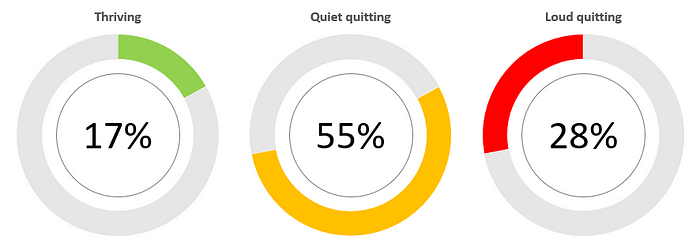
A 2023 report by Gallup, titled ‘State of the Global Workplace 2023’ highlights a concerning trend of disengagement in the workforce, with nearly 83 per cent of workers worldwide being classified as either “quiet quitting” or “loud quitting.”
Quiet quitting refers to employees doing the bare minimum required for their roles, while loud quitting represents employees who actively disengage and leave their jobs. Alongside these, newer forms of disengagement are emerging, particularly with the entry of younger generations into the workforce.
One such trend is “soft quitting,” which is characterised by a gradual decrease in emotional investment and subtle changes in behaviour over time. Another, the “lying flat” concept, originated in China and reflects a rejection of the relentless demands of modern work, including the pressure for career progression and continuous productivity.
Gallup’s report further highlights the concerning reality of employee engagement in Kenya. Only 17 per cent of employees in Kenya are engaged in their work, a significantly lower figure compared to neighbouring countries such as Uganda, Tanzania, and the Republic of Congo.
This disengagement is not only a local issue, globally, it is estimated that the impact of disengaged employees costs the global economy a staggering $8.9 trillion annually.
These alarming statistics underline the urgent need for organisations worldwide to prioritise employee experience as a core component of their operations. Failing to do so can lead to severe consequences, affecting not only organizational performance but also the well-being of employees and, by extension, the overall economic growth of nations.
Addressing the challenges facing the Kenyan workforce requires a comprehensive approach. First, organisations must foster a culture of employee empowerment, where employees feel they have a sense of purpose and ownership in their roles.
Second, providing opportunities for professional growth and development is crucial to keeping employees motivated and engaged. Finally, regular feedback and open communication throughout the employee’s lifecycle are vital for creating an environment of trust and collaboration.
By focusing on improving EX, organisations can unlock the full potential of their workforce. This approach can drive increased innovation, higher productivity, and improved customer satisfaction.
The Institute of Customer Experience’s inaugural survey on State of Employee Experience for Customer Experience (CX) Success” sheds light on critical areas for improvement within the Kenyan workforce. The findings suggest that companies need to pay more attention to aligning EX with CX, strengthening organisational culture, and developing aspirational leadership that inspires employees to reach their full potential.
This report also aligns with the Government of Kenya’s strategic focus on public service delivery, as outlined in the Kenya Strategic Plan 2023-2027. By understanding the current state of EX and its impact on service delivery, decision-makers can prioritise interventions that will enhance organisational performance and meet the unique and dynamic needs of citizens.
The survey identified four major areas for organisational leaders to focus on: a stronger emphasis on EX, better alignment with CX efforts, a stronger organisational culture, and the cultivation of aspirational leadership. One key takeaway from the survey is the noticeable gap between the understanding of EX and the actions taken to improve it.
Additionally, the survey found challenges in addressing the diverse needs of different employee segments, as well as significant gaps in diversity, equity, and inclusion efforts. Another striking finding was that over 50 per cent of employees in Kenya were found to be disengaged, highlighting the urgent need for improved engagement strategies.
This insight makes it clear that EX must be viewed as a cornerstone of organisational success. Prioritising positive EX not only improves workplace satisfaction but also plays a critical role in attracting and retaining top talent. This, in turn, enhances productivity, fosters a culture of collaboration and innovation, and ultimately drives business success.
As we move forward, it is essential for organisations to recognise the pivotal role of aspirational leadership in steering EX to achieve CX success. Aspirational leadership goes beyond setting targets and delegating tasks; it focuses on creating an environment that fosters emotional connection, purpose, and growth.
This approach to leadership nurtures continuous development, supports employee advancement, and prioritises overall well-being. When organisations adopt this leadership style, they empower employees to rediscover their motivation and contribute to sustainable business growth and long-term success.
Organisations that recognise the value of employee experience and take steps to address the needs of their workforce will be better positioned to succeed in today’s competitive, fast-evolving market. By fostering an environment that empowers and motivates employees, organisations can ensure a more engaged and productive workforce, driving innovation and achieving greater success both internally and externally.
The writer is a board member at the Institute of Customer Experience Kenya
Customer Experience x Data Privacy — a symbiotic relationship
By Akshay Shah
How can Customer Experience (CX) professionals navigate the delicate balance between creating outstanding experiences and respecting privacy? This article explores this crucial challenge, offering practical tips for building trust through transparency and data control.
With great power comes great (data) responsibility
Picture this: You’ve just delivered an outstanding experience to a new customer and you’re eager to follow up. Perhaps you’re considering sending personalised promotions, requesting feedback or engaging them through WhatsApp. It seems like standard practice in CX or marketing. After all, a seamless and personalised customer experience that is relevant can make or break your business.
The Kenyan Data Protection Act emphasises the importance of data privacy, making it essential for brands to find the delicate balance between leveraging data to enhance CX and safeguarding trust.
To Personalise or Not to Personalise
Personalisation hinges on data. Understanding customer preferences, behaviours and needs is paramount to delivering experiences that set your brand apart.
However, the line between personalised and intrusive can be dangerously thin.
Consider McDonald’s UAE, which sent a thoughtful note and a free meal to a customer who ordered from a hospital. While this might seem like a great example of personalisation, it raises eyebrows on privacy boundaries.
Closer to home both the Office of Data Protection Commissioner and the Communications Authority of Kenya are reporting increased confidentiality and privacy complaints (click on the links to read more about these complaints). This trend underscores the growing concern among Kenyan consumers about how their data is being used.
The CX practitioner’s role in building trust through clarity and transparency
Courtesy of ODPC
Clarity and transparency are crucial as consumers become more conscious of their data privacy rights. Here are a few practical steps to help you build trust while complying with data regulations (let your DPO and technical teams worry about the implementation details):
1. Be transparent about data collection
Be upfront with customers about what data you’re collecting and why. An example of this could be displaying clear, jargon-free privacy notices on your website and app.
Obtain consent or other legal basis for processing their data.
Disclose the use of AI in automated decision-making, such as credit scoring, to your customers.
2. Be honest about retention and data sharing
Let your customers know how long you will keep their data.
Inform them if you’re sharing their data with any third parties and why.
An example of this could be to include a simple infographic explaining your data lifecycle and sharing practices within your privacy notice.
3. Offer control
Limit the amount of personal data you collect.
Empower your customers with control over how they opt in or out of services and data usage.
Allow customers to request copies of their data, make updates, or even delete their information. This empowers your customers and helps reinforce trust in your brand.
4. Demonstrate data security
Data breaches can erode trust quickly. Continuously reassure customers that their data is protected with strong security protocols.
If customers trust your brand to safeguard their information, they’ll be more likely to share their data, creating opportunities for personalisation.
CX and Privacy: A symbiotic relationship
It’s easy to think of data privacy and customer experience as opposing forces, but they don’t have to be. They work best when they support each other. Here’s how you can turn this challenge into an opportunity:
Collaborate with your DPO: Have a regular coffee with your DPO and talk about how your brand can create experiences that are both personalised and privacy-compliant.
Educate your team: Ensure your CX team understands the importance of data privacy and how to handle customer data responsibly. Ensure data privacy and reputation management are agenda items in your CX huddles and a component of your CX strategy.
Use privacy to differentiate your brand: Communicate your commitment to data privacy as a key brand value.
Continuously improve: Regularly review and update your data practices based on customer feedback and evolving regulations. Do this with your DPO — remember you wear the customer’s hat while your DPO wears the regulator’s hat!
Now is the time to re-imagine CX — not just as an avenue for personalisation, but as a pathway to to create privacy-conscious experiences that elevate your brand and build enduring relationships. Remember, trust is valuable … protect it wisely.
Disclaimer: This article provides practical tips to help you navigate the tricky waters of data privacy. But remember, we’re not your legal lifeguards! For a deep dive, consult your trusted legal counsel before making any waves.
We’d love to hear your thoughts! What other practical tips do you have for balancing CX and data privacy? Share in the comments below.
Elevating Employee Experience for Customer Experience Success
Background
By Akshay Shah
In collaboration with the Institute of Customer Experience, Kenya, we gathered insights from over 320 respondents in March-April 2024, through our experience management platform. Our diverse sample covered various demographics, roles, and industries, focusing on the 2024 theme: “Elevating Employee Experience (EX) for Customer Experience (CX) Success.”
The anonymous survey sought to uncover key quantitative and qualitative insights that would delve into:
Employee Net Promoter Score — Measure levels of employee loyalty and potential advocacy towards their workplace.
Employee Effort Score — Gauge the ease with which employees deliver outstanding customer experiences.
Employee Satisfaction — Examine overall job contentment, through experience drivers like engagement, diversity and inclusion, empowerment, leadership, teamwork, growth and recognition.
EX to CX Alignment —Investigate the influence of employee experience on customer experience and determine variations in the importance and investments allocated to both by organisations.
CX Perceptions — Capture how organisational capabilities need enhancements to deliver exceptional customer services.
EX Perceptions — Capture thoughts on how organisational capabilities need enhancements to deliver exceptional employee experiences.
Thematic findings
In this survey, we asked respondents: “What would you do differently if you were CEO for a day?”. The responses to this and other questions in the survey uncovered four major themes for leaders to pay attention to:
The Need for A Stronger Focus on Employee Experience
Better Employee Experience to Customer Experience Alignment
Embedding a Stronger Culture Within Organisations
Active Demonstration of Aspirational Leadership
These are further explored below.
Key takeaways and actions for business leaders
Quiet Quitting: One of the most alarming findings is the prevalence of “quiet quitting” where employees remain in their roles but mentally disengage from their work. Over 50% of respondents reported a lack of active engagement, aligning with global trends. Such disengagement undermines culture and hampers motivation, productivity and overall company performance.
EX — CX Disconnect: While organisations recognise the influence of EX on CX, they lack active focus and investments in EX. To truly excel, businesses must embrace a holistic experience culture that prioritises leadership experience, employee experience, and customer experience in equal measure.
Know Your Employees: Organisations must grasp the values, needs and challenges of different employee segments; with Gen Z posing particular challenges. Regular Voice of Employee surveys and culture audits can help leaders bridge the perception gap with the broader workforce and make data-driven decisions on organisational improvements.
Diversity, Equity and Inclusion (DEI) Matters: Despite progress in DEI, the survey revealed a noticeable disparity in experience and opportunities for female employees, who recorded a lower Employee Net Promoter Score (eNPS) than their male counterparts. Organisations must provide more inclusive and equitable opportunities across the workforce.
Empowerment and Personal Growth: Employees seek accountability, empowerment and involvement in decision-making. They desire opportunities for growth, mentorship and training through a supportive “fail and learn” business environment.
Recognition and Appreciation: Many organisations claim to have recognition frameworks in place, but the survey suggests a need for improvement in acknowledging and celebrating employees who deliver exceptional customer experiences.
Well-being and Work-life Balance: Prioritising employee well-being through wellness programs, flexible work arrangements, and resources to manage stress is crucial for enhancing productivity and overall happiness.
A stronger focus on EX
Sound bite: “As an organisation that deals with customers, more effort needs to be placed on offering exceptional customer experience. This starts with ensuring employees are happy and satisfied.”
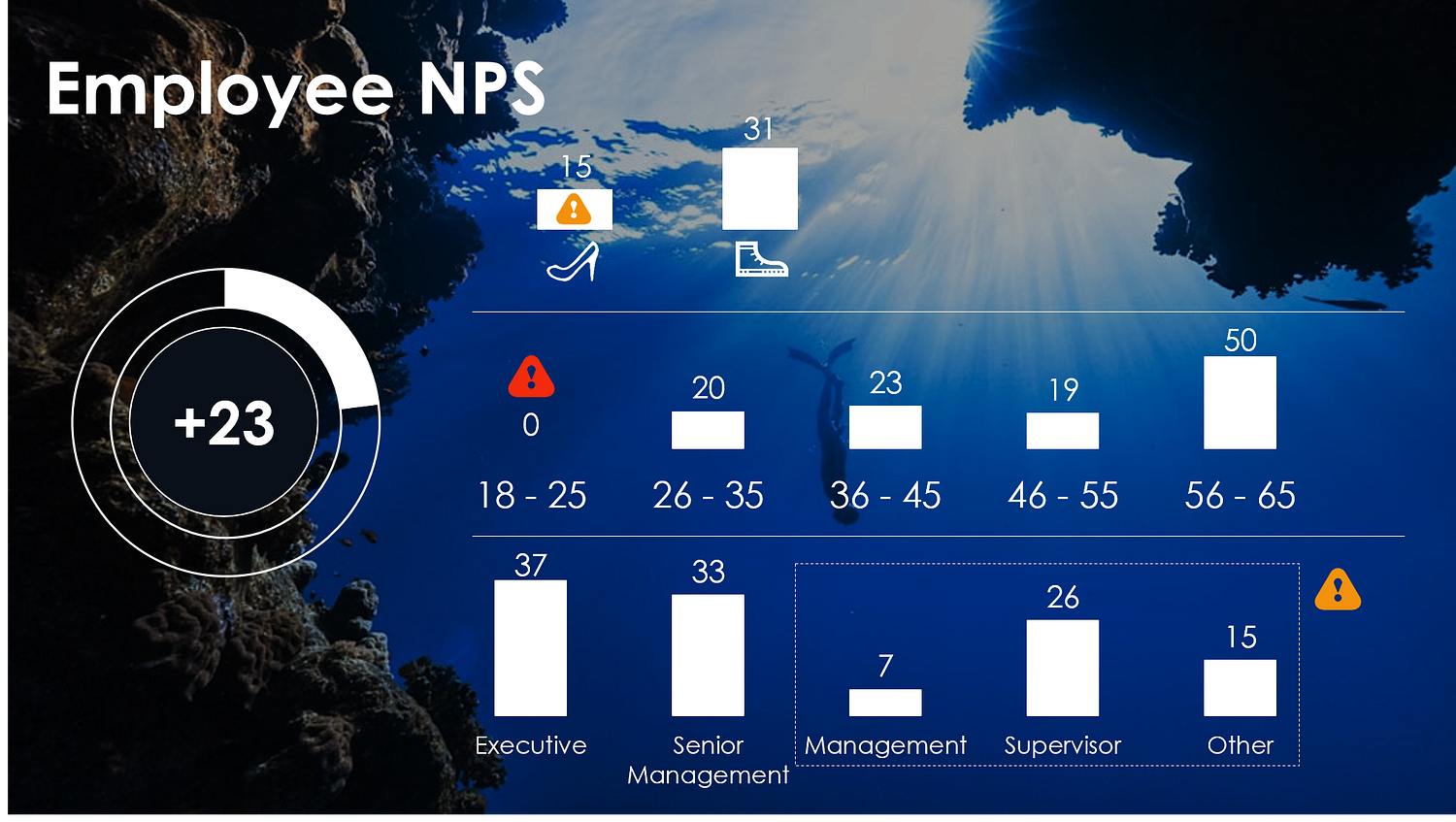
The survey revealed an overall eNPS of +23, comprised of 47% promoters, 29% passives and 24% detractors.
This is a huge problem for Kenyan businesses as over 50% of the workforce does not have a strong emotional attachment to their company.
Almost a third of the respondents (passives) have quietly quit. They are physically present at work but have mentally checked out. They are putting in minimal effort and are psychologically disconnected from their workplace.
Detractors are employees who take actions that directly harm the organisation, disrupting its culture, undercutting its goals and opposing its leaders. They negatively impact the productivity and engagement of other employees, leading to lost customers and revenues.
Diving into eNPS variations through various demographic lenses uncovered some startling findings:
Gender Disparity: Despite progress in DEI, there’s a noticeable disparity in experience and opportunities for female employees who recorded an eNPS of +15 compared to male respondents who recorded an eNPS of +31.
Generational Differences: The Gen Z segment recorded the lowest score of 0, trailing behind Boomers, Gen X and Millennials. With Boomers recording the highest eNPS, does this mean that Kenyan businesses are antiquated and are still operating as they did decades ago? Gen Z will soon surpass Millennials as the most populous segment in the workplace. Therefore organisations must grasp the value systems, needs and challenges of different employee segments and what makes them tick.
Role-Based Disconnect: Executives and senior leaders report significantly higher eNPS than others. This suggests a perception gap; with the leadership team disconnected from the broader workforce.
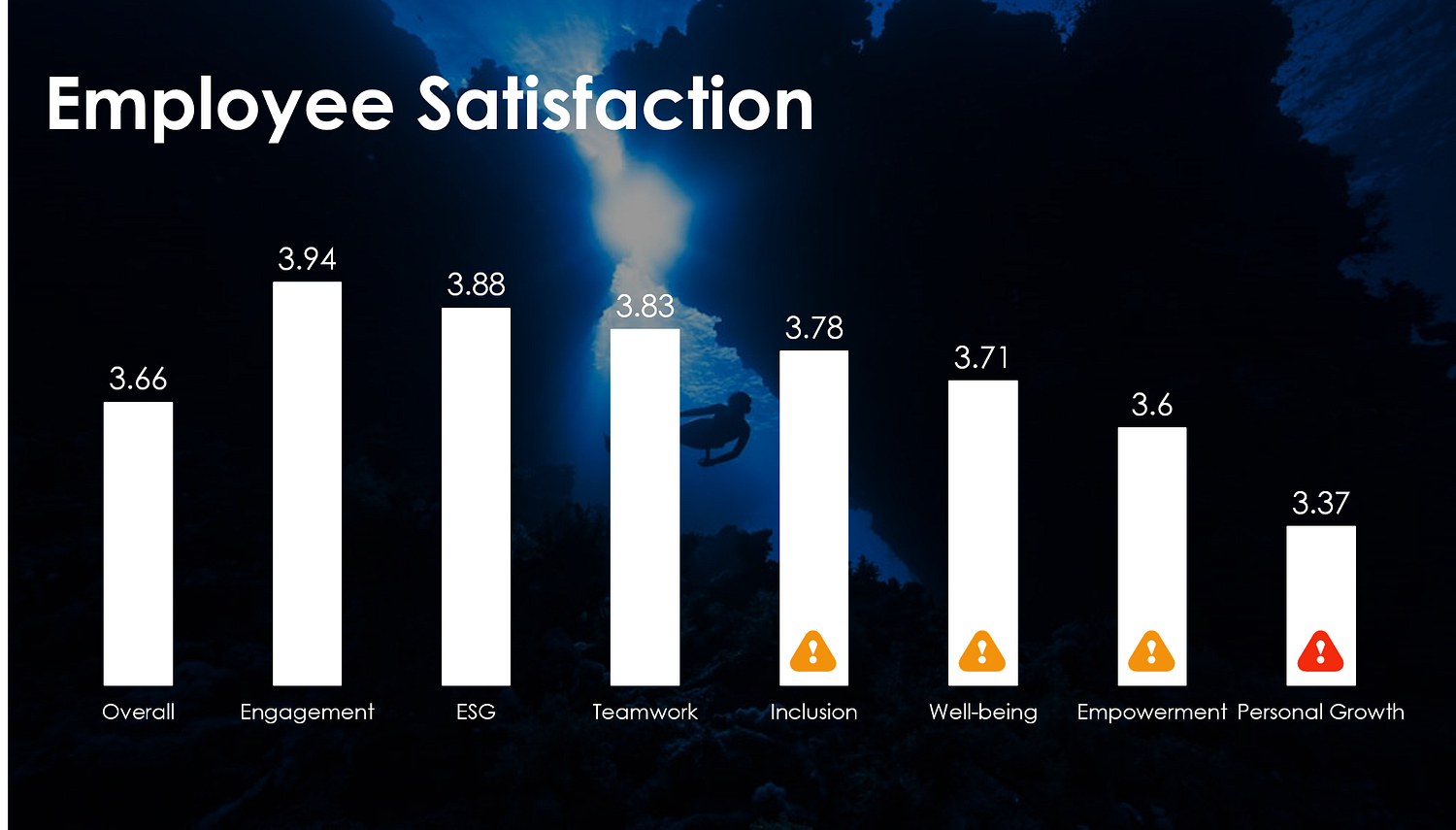
An overall eSAT of 3.66 (73%) indicates room for improvement, especially in areas of:
Empowerment and Growth: Employees seek inclusion in decision-making but want to be empowered in a supportive “fail and learn” business environment. Organisations need to provide more opportunities for growth, mentorship and training.
Recognition and Appreciation: Organisations need to improve in acknowledging and celebrating employees who deliver exceptional customer experiences.
Work-Life Balance and Wellness: Organisations should prioritise work-life balance and provide resources for physical and mental well-being.
Key action areas for business leaders:
Understand Employee Needs: Grasp the values, needs and challenges of different employee segments; especially Gen Z.
Unlock the Voice of Employee (VoE): Bridge the perception gap between senior leaders and the broader workforce through active VoE programs. These will help leaders listen, respond and react to employee concerns, feedback and ideas.
Diversity, Equity, and Inclusion (DEI): Provide more inclusive and equitable opportunities across the workforce.
Empowerment and Growth: Provide opportunities for learning and development, allowing employees to acquire new skills to progress in their careers and contribute meaningfully to decision-making.
Recognition and Appreciation: Acknowledge and celebrate employees who deliver outstanding customer experiences.
Work-Life Balance and Wellness: Prioritise work-life balance and employee well-being, providing resources for physical and mental health.
2. Better alignment with CX
Sound bite: “It is so gratifying that my work has the potential to impact so many lives. I would want to see much more investment in CX initiatives.”
Salesforce, IDC — Future Employee Relevance Study 2022
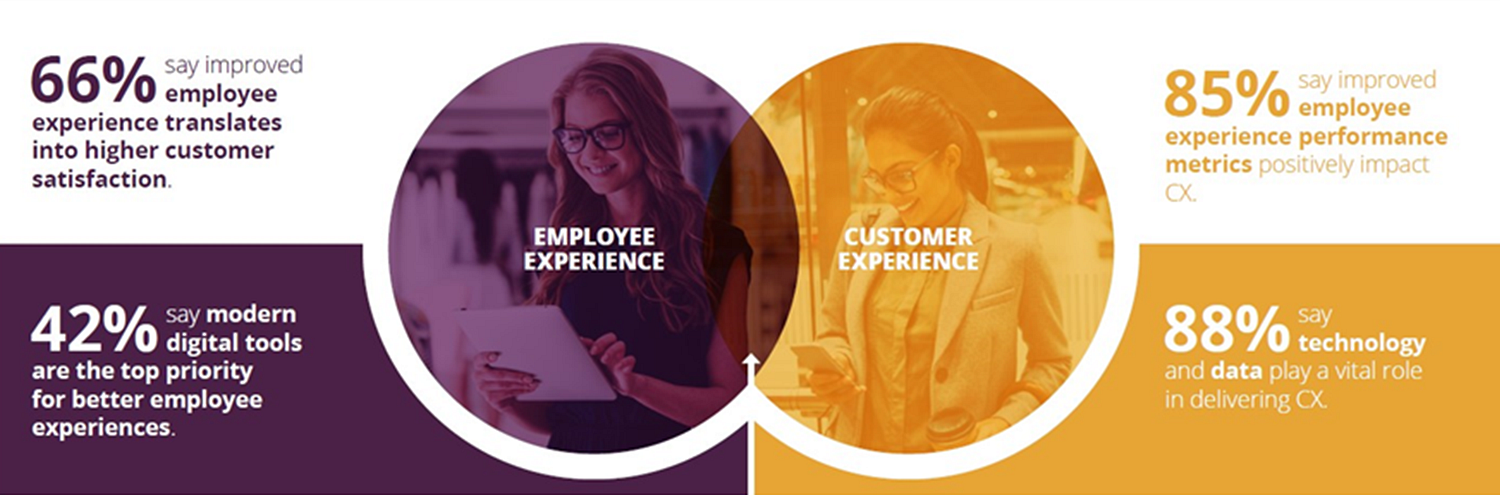
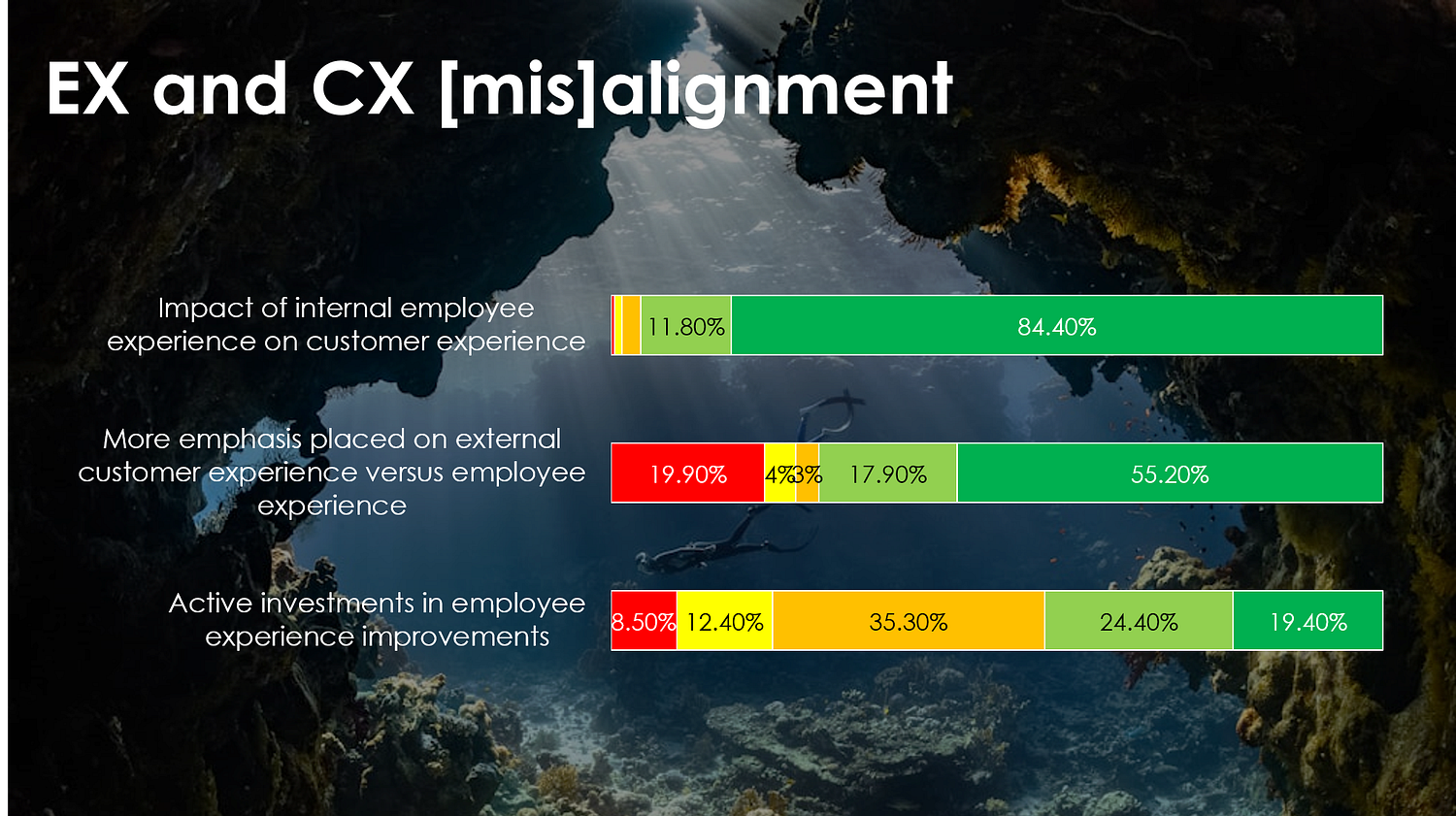
Various global surveys have indicated a direct correlation between EX and CX and this was strongly echoed by the survey respondents. However, respondents indicated that their organisations still place more emphasis on external CX and there are less active investments in improving EX.
Key action areas for business leaders:
Customer and Employee Centric Approach: Organisations should prioritise customers and employees, aligning CX and EX initiatives for better synergy.
Strategic Focus on CX: Place CX at the core of corporate strategy, fostering a customer-focused mindset and behaviours among employees.
Digital Transformation: Utilise data and technology to boost the customer experience, focusing on refining and optimising processes, procedures and systems.
Voice of Customer (VoC) Programs: Proactively gather and act on VoC insights. Enhance responsiveness to customer complaints and feedback.
3. Stronger culture
Sound bite: “Many remain trapped in toxic work environments thinking they will change the environment or the environment will change for the better in future, not realising that it is taking a toll on their mental and emotional well-being.
When asked to sum up their organisation’s culture in three words, respondents revealed a range of cultures:
Employee (and customer) centric: Words like “fun”, “caring”, “empowering”, “inclusive”, “diverse”, “collaborative” and “customer-focused” highlight that many companies are providing a supportive and upbeat atmosphere for their employees.
Traditional vs Dynamic: Words like “hierarchical”, “bureaucratic”, “siloed” and “formal” point to conventional structures, while “energetic”, “disruptive”, “creative”, “progressive”, “forward-thinking”, “agile” and “innovative” suggest a more dynamic approach.
Challenging Cultures: Negative words such as “toxic”, “unsupportive”, “micromanaged”, “discrimination”, “aggressive” and “manipulative” indicate areas needing improvement for a healthier and more positive work environment.
ICX State of CX in Kenya — 2017
A robust organisational culture is essential for any company to elevate its customers and employees.
Key action areas for business leaders:
Simplifying structures: Reduce bureaucracy and red tape to flatten organisational structures and foster open and transparent communication.
Encouraging inclusivity and collaboration: Cultivate an environment that embraces diversity, fosters collaboration, stimulates innovation and encourages knowledge-sharing across the organisation.
Focussing on Accountability and Meritocracy: Promote accountability and implement merit-based decision-making and performance evaluations.
Creating a Unified Work Environment: Build unity and align goals across departments and subsidiaries through team-building activities and creating an enjoyable work atmosphere.
4. Aspirational leadership
Sound bite: “There is an open door policy and everyone can express themselves without fear of intimidation. Everyone is listened to.”
Key action areas for business leaders:
Lead by Example: Cultivate a culture centred on empathy, compassion and approachability and values open communication, collaboration and employee well-being. Encourage constructive feedback, recognise achievements and promote a healthy work-life balance.
Build Relationships: Establish and nurture open communication channels to strengthen organisational connections. Nurture effective and transparent dialogue between leadership and employees across all departments and levels.
Focussing on Accountability and Meritocracy: Promote accountability (especially for employees in a leadership role) and implement merit-based decision-making and performance evaluations. Encourage empowerment, delegation and accountability at all levels within the organisation.
In conclusion
The world of work is transforming, with organisations grappling with challenges of ever-evolving uncertainty and complexity. Just as customers consume your brand’s products and services; employees consume your brand’s culture and workplace.
To achieve success, leaders must pay attention to both. The insights from this survey highlight a critical gap. Businesses put significant focus and investment on external customers. However, with over 50% of respondents not emotionally attached to their workplace; there’s a lot more work to be done:
A thriving “customer-centric and employee-first” culture coupled with aspirational leadership is the bedrock for any company to prioritise both customers and employees.
Leaders must grasp the values, needs and challenges of its employee segments; with Gen Z posing unique challenges.
Employees seek accountability, empowerment and inclusion in decision-making but require growth through mentorship and training.
Employees want recognition for delivering exceptional customer experiences.
Employees need better work-life arrangements and resources to manage their physical and mental well-being.
By actively improving and investing in employee experience, organisations will reap the benefits of a happier and more productive workforce that will ultimately drive business growth.
EX for CX Success 2024 ICX Theme
In line with this year’s national theme, “Elevating Employee Experience for Customer Experience Success,” ICX Kenya in partnership with Rate My service invited the public to participate in an important survey aimed at understanding factors that drive employee experience (EX) and the effect on bolstering or hindering customer experience.
These are the results from the nation wide survey.
EX FOR CX SUCCESS SURVEY 2024 FINDINGS
[pdf-embedder url=”https://icxkenya.co.ke/wp-content/uploads/2024/05/ICX-report-2024-lq.pdf” title=”ICX EX for CX Report 2024″]
Becoming A CX Champion
“A leader is a dealer in hope.” – Nigerian Proverb
This morning, I had the privilege of being a guest speaker at the CX Academy Africa’s Weekly Breakfast Virtual Conversation where we talked about “Becoming a CX Champion.”
I have 20 years’ experience spanning across Hotel Industry, Banking and Public Sector. While the early years of my career in the hotel industry significantly contributed towards nurturing my appreciation for CX, I did not initially set out to be a CX Champion in those early years. But over time, I have become more deliberate in becoming a CX Champion such as forming a networking forum dubbed “CX Possibilitarians” that brings together +400 CX Professionals as well as joining member organizations such as ICX where I serve as a Board Member.
A true CX champion requires commitment, dedication, and strategic thinking to drive meaningful improvements in customer experience, ultimately leading to increased customer satisfaction and loyalty. This means you have to see the big picture – it’s about daily consistency and not being afraid to put in the effort required to carry through CX Programs.
“A smooth sea does not make a skillful sailor.” – African Proverb. So, what challenges do CX champions face?
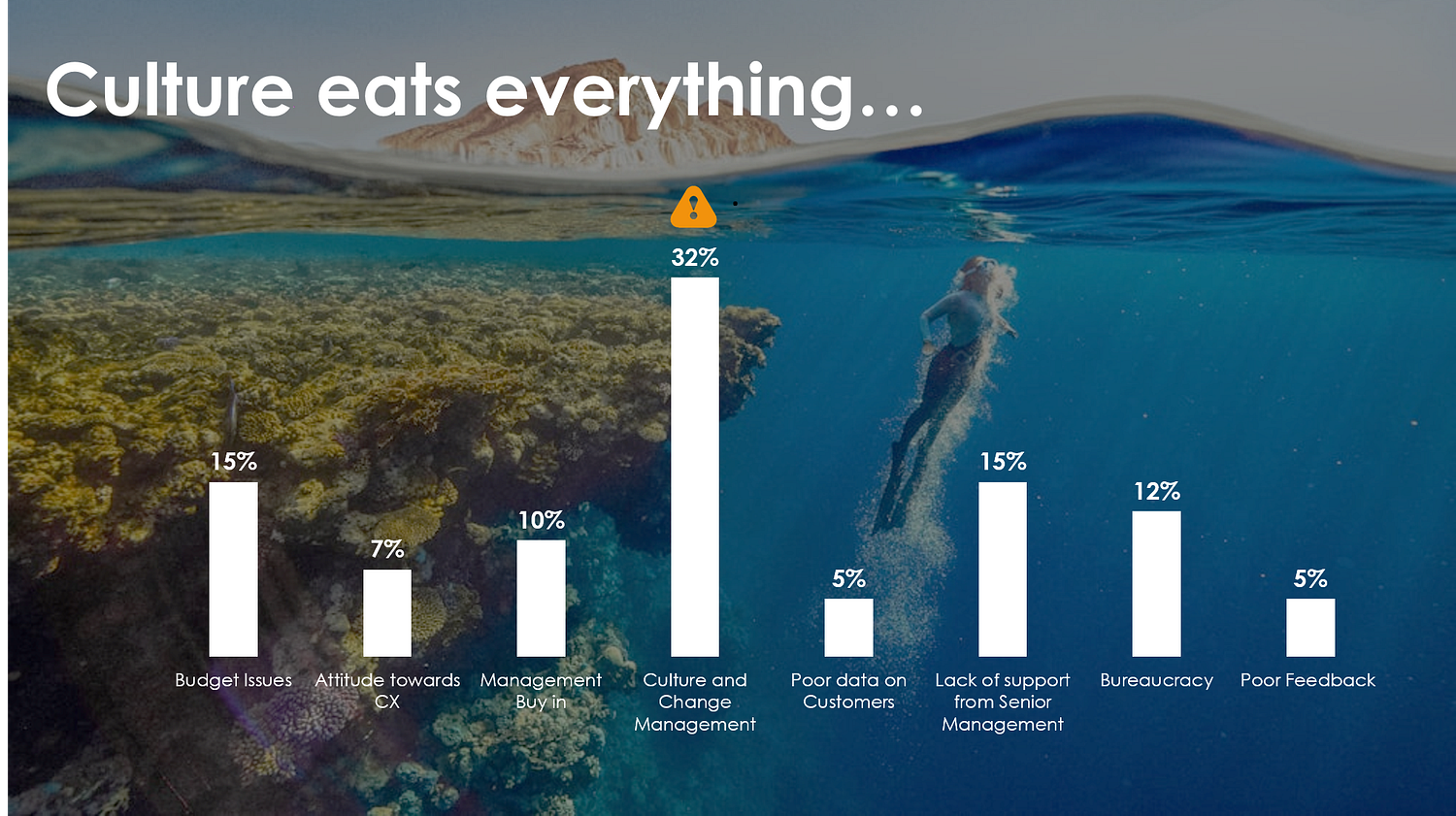
Resistance to Change: Shifting towards a customer-centric culture may face resistance from employees who are accustomed to a different way of operating. Additionally, implementing CX improvements often requires changes to established processes, which can be met with resistance from employees comfortable with the status quo.
Silos and Departmental Fragmentation: Coordinating efforts across different departments can be challenging, especially when each department has its own priorities and objectives.
Competing Priorities & Limited Resources: CX initiatives may compete with other organizational priorities for attention and resources, such as additional budget, manpower, or technological resources, making it challenging to secure buy-in and support.
Data Quality and Accessibility: Data silos, incomplete data, or inadequate data management practices make it difficult to accessing and analyse relevant customer data.
Measuring and Demonstrating ROI: Quantifying the return on investment (ROI) of CX initiatives and demonstrating their impact on key metrics like revenue and customer satisfaction.
Technological Complexity: Leveraging technology to enhance CX has its fair share of complexities as well as keeping pace with advancements in digital tools and platforms. For instance, AI is quite the buzzword, but truth be told translating this to everyday CX still requires a lot of demystifying.
External Factors: External factors that are typically beyond our control such as macroeconomic conditions, regulatory changes, industry disruptions and even pandemics impact CX efforts and present additional challenges for CX champions to navigate.
“The best way to eat an elephant in your path is to cut him up into little pieces.” – African Proverb. If you desire to become a CX champion, here are my thoughts for you to consider:
Develop Genuine Customer Empathy: Take time to understand and appreciate your customers’ needs, preferences, and pain points by actively listening to their feedback and engaging with them regularly. Champion the voice of the customer within your organization by advocating for their needs and preferences in all decision-making processes.
Stay Informed: Encourage feedback from both internal stakeholders and customers to gather insights, identify areas for improvement, and measure the impact of CX initiatives. Stay updated on industry trends, best practices, and emerging technologies in the field of customer experience to continuously improve your knowledge and skills.
Be Data-Driven: Utilize data analytics to identify patterns, trends, and opportunities for improvement in the customer journey, and use insights to inform strategic decision-making.
Foster Cross-Functional Collaboration & Lead by Example: “If you want to go quickly, go alone. If you want to go far, go together.” – African Proverb. Build strong relationships with colleagues across different departments to foster collaboration and alignment towards a unified CX vision. Demonstrate commitment to customer-centric values and behaviors in your own actions and interactions with colleagues and customers.
Celebrate Successes: Work with HR to recognize and celebrate successes, no matter how small, to maintain momentum and inspire others to continue prioritizing CX efforts.
Be Resilient: Anticipate and overcome challenges and setbacks along the way, staying focused on the ultimate goal of delivering exceptional customer experiences.
My parting shot: “When spider webs unite, they can tie up a lion.” – Ethiopian Proverb. This proverb highlights the power of unity and collective effort, suggesting that even small entities, when united, can achieve significant outcomes. In the context of CX, it emphasizes the impact of teamwork and collaboration in addressing customer needs and challenges.
Becoming a true CX champion requires commitment, dedication, and strategic thinking to drive meaningful improvements in customer experience, ultimately leading to increased customer satisfaction and loyalty. This means you have to see the big picture – it is not about winning and losing, it’s about every day hard work and not being afraid to put in the effort required to carry through CX Programs.
So, are you committed to becoming a CX Champion today?
This article has been written by Ms. Wavi Mungala,Board of Directors ICX Kenya.
ICX – ANNUAL THEME 2024 – Elevating EX for CX Success
#ElevatingEXforCXSuccess
“Employees are the heartbeat of any organization. Prioritize their experience, and you’ll create a workplace where talent not only stays but flourishes.” ~ Unknown
What the Theme Means
The vitality of every organization relies on the energy of its employees. Leaders must cultivate a workplace culture that not only draws in and keeps individuals but also motivates and empowers talent to perform at their peak, ultimately achieving excellent outcomes. #EmployeeExperience encompasses the physical, cultural, psychological/emotional and technological environment in which employees work and how these factors impact their engagement, productivity, and overall well-being.
Why the Theme
In response to valuable feedback obtained through listening sessions with our members, we
identified the significant concern of Employee Experience. Upon deeper exploration to comprehend work cultures and reinforce positive work environments for organizational success, we found that the demand for this topic was substantial. Recognizing its timeliness, the Institute has taken the initiative to delve into and embrace this crucial conversation.
The 2023 East Africa Workplace Assessment Survey conducted by Connect X aimed to gain a
deeper insight into the present employee experience and the aspirations of the East African workforce. With 502 employees participating from various regions in East Africa, the survey revealed significant findings:
Employees, across different segments, generally express confidence in the organization’s
direction. They prioritize the continuation of values such as accountability, teamwork,
employee engagement, brand image, and customer satisfaction within their workplace.
A notable discovery was that most employees find their own values reflected in the current
workplace culture. This suggests that they actively contribute to shaping the culture rather
than being passive recipients of a culture imposed by others. This presents an opportunity to
leverage employee input for any necessary cultural adjustments.
The Way Forward
The theme for 2024, #ElevatingEXforCXSuccess, aims to guide both companies and individuals
in targeting specific areas of focus. These action items are geared toward strengthening the
employer-employee relationship, ultimately resulting in enhanced customer experiences and greater
organizational success.
Encourage Open Communication & Appropriate Conflict Resolution Systems: Establish transparent channels for feedback and dialogue.
Conduct Recognition Programs: Implement systems to acknowledge and appreciate
employee contributions.
Employee Development: Provide opportunities for skill enhancement and career growth.
Work-Life Balance: Support flexible schedules and wellness initiatives for a healthy balance.
Have Clear Expectations: Communicate roles, responsibilities, and goals clearly.
Empowerment: Grant autonomy to employees, fostering a sense of ownership.
Supportive Leadership: Cultivate approachable, empathetic, and supportive leadership.
Champion for Employee Mental Health & Wellbeing: Foster a supportive workplace culture that empowers individuals, enhances resilience, and promotes holistic flourishing.
Promote Diversity and Inclusion: Cultivate an environment where every voice is valued, there is enriching creativity, innovation, and collective success.
Have Fun at Work: Embrace a culture of joy and creativity at work, where having fun becomes a catalyst for increased productivity, engagement, and a positive work environment.
For CX Departments, you can adapt the theme in the following ways:
Conduct an EX Audit: How is your organization ranking? What are the gaps? How is EX linking to CX?
Measure EX Success: Conduct an employee NPS and link it to the customer NPS. Measure these metrics regularly.
Map the Employee Journey: Carry out the employee journey and integrate it to the customer journey map.
Integrate EX and CX KPIs: Adopt single view dashboards for EX and CX performance.
HR Department Collaboration: Work closely with the HR department to ensure EX success.
Build a Customer-Centric Culture:Unify Departments for Exceptional CX: Foster an inclusive organizational culture and promote seamless interdepartmental collaboration.
Conduct Recognition Programs: Implement a regular staff recognition program to boost morale and enhance motivation.
To Note for All Members
This year ICX will implement and work with the global customer service (CS) week theme at a local
level – this comes in as a result of incorporating feedback from our members. While ICX will support and promote the global theme during CS week, the local theme #ElevatingEXforCXSuccess will guide the Institute’s annual activities, including the Conference and the strategic planning of your organizations.
Members may also incorporate #ElevatingEXforCXSuccess as a sub theme or additional theme during CS Week.
Conclusion
ICX-Kenya is excited to unveil the 2024 theme: “Elevating Employee Experience for Customer Experience Success.” We encourage you to reconsider, envision, and innovate CX initiatives with a focus on the internal customer.
ICX Kenya is now calling organizations to initiate activities around #ElevatingEXforCXSuccess.
Investing in creating an environment that prioritizes employee well-being, engagement, growth, and satisfaction contributes significantly to delivering exceptional service and fostering customer loyalty. The two are intricately linked, forming the foundation for a successful and customer-centric organization.
We also invite the ICX Community to participate by sharing online stories showcasing the influence
of Employee Experience on Customer Experience using the hashtag:
#ElevatingEXforCXSuccess
By fostering a positive EX, organizations can cultivate a customer-centric approach, leading to improved CX, increased customer loyalty, and sustained business success.” – Unknown
Personalization and Hyper-Personalization
We have all gone through some type of personalization as we carry out our day to day operations. Ever walked into your favorite restaurant or coffee shop and even before you order, the waiter identifies you and knows your preferred drink or meal? We could say that’s how it all started.
Personalization uses basic customer information like name, location or gender to tailor recommendations, messages or adverts that appeal to the customer’s preferences, behaviors, and needs.
They say the devil is in the small details and in this ever changing era of technology, personalization is not enough; and here enters Hyper- Personalization.
Hyper-personalization is the customization of digital content based on individual behavior.
It’s far more advanced, going a step further by tailor making products, service and experiences; taking into account customers’ needs and wants by leveraging real-time behavioral data, advanced analytics, and artificial intelligence.
An example of Hyper-personalization may look like: You have probably gone to a website or an App and started your purchase journey, added items to cart but didn’t quite complete the order. After a while, you may get a notification or email inviting you to go back and complete the action.
How to Hyper-Personalize Customer Experiences:
Automate: It is not possible to manually collect all the customer information required for hyper-personalization. It is therefore important to invest in a customer relationship software that will collect, store, and analyze customer data. The information will be used to create personalized marketing campaigns which will assist in offering hyper-personalized experiences.
Artificial Intelligence: This technology is able to analyze huge amounts of data in real time, learn from customer behavior and preferences providing accurate and relevant content over time and help in creating personalized suggestions for individual customers.
Data Analytics: When it comes to hyper-personalization, data is everything. It is heavily reliant on real-time data analytics to collect and analyze customer data, i.e. browsing behavior, purchase history, and demographic information.
This information is then used to create a full picture of the customer’s needs and interests.
Benefits of Hyper-Personalization:
Improved Customer Experience: Customers today are overloaded with information in the various channels they patronize when shopping and they now seek for content that appeals directly to them.
The Hyper personalization engine can identify what customers are looking for and display to them, the best possible match. This makes shopping less frustrating and more exciting.
Increased Customer Engagement: Hyper-personalization uses real time data which enables an organization to get valuable insights about the times users are most active and most likely to engage with your content.
Coupled with messaging and products relevant to the customers’ needs and interests, you can configure recurring campaigns, while scheduling them on specific days and time enabling the company to reach customers at a time that they’re most likely to be online.
Increased Customer Loyalty: Customers are likely to remain loyal and return to make repeat purchases when they feel that a company understands their preferences and needs.
This article has been written by Ms. Jackie Wahome,Customer Experience Trainer, Customer Centric Kenya.
Customer Involvement
The Power of Customer Collaboration
The survival of a business today is highly dependent on customer satisfaction. Customers have access to multiple options and if there’s a service lapse, there’s a high chance that the customer will move to the competition. In order to understand customer needs and achieve customer satisfaction, some companies are involving their customers in the customer service process.
Customer Involvement is the active participation of customers in different parts of an organization’s business. This could be in different areas such as product development, marketing, and customer service. It involves engaging customers to learn about their needs, preferences, and expectations so that products and services can be made in a way that better meets their needs.
Importance of Customer Involvement
1. Clearer Understanding of Customer Needs:
Companies that involve their customers at different areas of their operations, get to better understand their needs and preferences. Therefore, these companies make products and services that cater to their customer’s needs.
2. Improved Customer Satisfaction and Loyalty
When customers feel that their opinions are heard and valued, they are more likely to be happy with the product or service because it answers their needs. This then translates to customer retention and loyalty.
3. Enhanced Brand Reputation
Companies that encourage customer participation in their operations are considered to be more customer centric hence boosting their reputation and attracting new customers.
4. Increased Innovation
Companies can get new ideas and insights that they may not have thought of, by engaging their customers. This can prompt development of products and services that better satisfies the customer needs.
5. Reduced Chance of Product Failure
By involving customers in product development and testing, businesses can decrease the risk of product recalls or even failure.
How do customers get to participate?
1. Customer Feedback: Get feedback on customers' interactions with goods and services in order to improve future offerings.
2. Crowd sourcing: This involves requesting suggestions and input from a large group of people through online platforms.
3. Co-creation: This involves working with customers to create new goods and services. This is mainly practiced in sectors like technology.
4. Co-Design: To ensure that the final product satisfies the customer, they get involved in the design phase. This is mainly used in the fashion industry.
5. Co-production: This involves customers at the manufacturing phase where they can offer their input on the final product which can then increase the quality of the finished product. For instance, restaurants getting feedback on the flavor and presentation of the food.
Case Study: Gillette
A report by Deloitte indicates that in 2018, Gillette launched its “heated razor” concept to gauge early-stage customer interest through the crowdfunding platform, IndieGogo. The crowd informed the design and helped move the razor into production, purchasing the allotted 1,200 razors within a matter of weeks.
In Summary
By engaging customers and having them participate in different areas of the business helps to build a sense of partnership and ownership between the customer and the business. This then translates to increased customer satisfaction and loyalty.
Fostering a CX-Based Community by Wavi Mungala
On 21 June 2023, I had the privilege of moderating a panel discussion about “Fostering a CX-Based Community” at the 14th #CXTransformation Summit hosted by Phoenix Business Intelligence with ICX Kenya as the local Association Partner. The panel discussion focused on the need to create communities for customers for a better Customer Experience. By establishing a dedicated space where customers can connect, engage, and share their experiences, organizations can foster a sense of belonging and loyalty among their customer base. Customer communities provide a platform for customers to interact with each other, offer support, and exchange valuable insights and feedback. This collaborative environment enables businesses to gain a deeper understanding of their customer’s needs and preferences, leading to more tailored and personalized experiences. Furthermore, a strong customer community can serve as an advocate for the brand, driving word-of-mouth referrals and positive brand sentiment. Ultimately, investing in a customer community helps organizations build lasting relationships, enhance customer satisfaction, and drive long-term business growth.
Here is a summary of the strategies we discussed on how to foster a CX-based community:
1. Establish a Dedicated Community Platform: Choose a platform or tool that enables seamless community interactions. This could be a dedicated online forum, a social media group, or a community platform specifically designed for customer engagement. Ensure the platform is user-friendly, accessible, and encourages active participation.
2. Define a Community Purpose and Values: Clearly define the purpose and values of your community. Communicate the goals, objectives, and expected behaviors to community members. Encourage a positive and inclusive environment where members feel safe, respected, and empowered to share their experiences and ideas.
3. Provide Community Guidelines: Set clear guidelines that outline the acceptable behaviors, content, and engagement within the community. These guidelines should promote respectful communication, discourage spam or self-promotion, and address any potential conflicts or concerns. Regularly reinforce these guidelines to maintain a healthy community atmosphere.
4. Encourage Customer-to-Customer Interaction: Foster peer-to-peer interaction and collaboration among community members. Encourage them to ask questions, share insights, and provide support to one another. This can be facilitated through discussion threads, user-generated content, or dedicated spaces for knowledge sharing and problem-solving.
5. Engage Proactively: Actively engage with community members by initiating conversations, responding to questions or feedback, and seeking their input on relevant topics. Be present, responsive, and transparent in your interactions. Regularly monitor community activities and participate in discussions to show your commitment to the community’s success.
6. Recognize and Reward Contributions: Acknowledge and appreciate community members who actively participate, contribute valuable insights, or help others. Recognize their efforts through public recognition, exclusive perks, or rewards. This recognition fosters a sense of belonging, encourages continued engagement, and motivates others to participate.
7. Provide Exclusive Content and Opportunities: Offer community members exclusive access to content, resources, or events. This could include early access to product updates, industry insights, educational webinars, or customer-focused events. Providing these exclusive opportunities helps members feel valued and provides additional value for being part of the community.
8. Incorporate Customer Feedback: Actively solicit and incorporate customer feedback into your business decisions and improvements. Demonstrate to the community that their opinions and ideas are genuinely considered and acted upon. This practice builds trust, shows that their voices are heard, and encourages ongoing engagement.
9. Organize Community Events: Host community events, both online and offline, that facilitate face-to-face interactions among members and between members and your business. These events can range from virtual Q&A sessions and webinars to local meetups or customer conferences. Community events provide opportunities for networking, learning, and fostering stronger relationships.
10. Measure Community Success: Regularly evaluate the success of your CX-based community by tracking key metrics, such as community engagement, user activity, satisfaction levels, and customer sentiment. Analyze the data to identify areas for improvement and to understand the impact the community has on customer loyalty, brand perception, and business outcomes.
Building a CX-based community is definitely not easy, it takes time and effort. It requires consistent nurturing, active engagement, and a genuine commitment to delivering value to your customers. However, by fostering a strong community, you create a platform for customers to connect with each other and with your business, fostering loyalty, advocacy, and ultimately, a positive customer experience.
And in the words of Annette Franz, “You can’t transform something you don’t understand. If you don’t know and understand what the current state of the customer experience is, how can you possibly design the desired future state?”